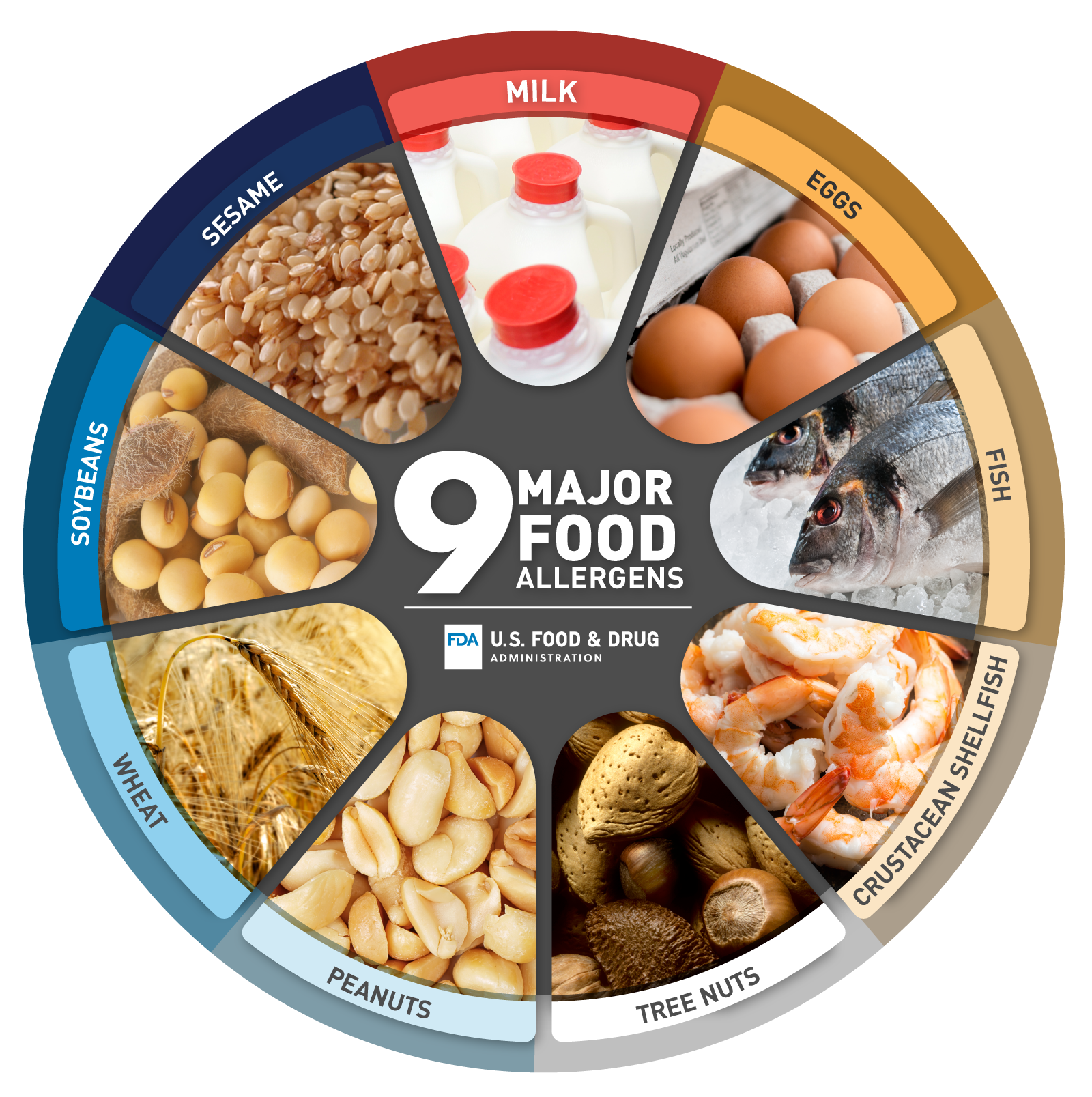
The FDA implements multiple strategies to protect consumers from allergens in food products. These strategies include regulatory requirements, industry guidance, surveillance, and regulatory actions as needed.
Read More
The FDA provides guidance documents outlining its current perspectives on various issues, including allergen management. Food safety regulations also contain provisions designed to address allergens and sensitivities.
Under the “Current Good Manufacturing Practice, Hazard Analysis, and Risk-Based Preventive Controls for Human Food” rule (CGMP & PC rule, 21 CFR part 117), the FDA has established requirements for businesses involved in the manufacturing, processing, packing, or holding of human food. This rule mandates allergen preventive controls to minimize cross-contact between allergenic and non-allergenic products, ensuring accurate allergen labeling. During inspections, the FDA assesses whether facilities have the necessary controls in place to prevent allergen cross-contact and confirm the integrity of allergen labeling.
The FDA actively monitors reports of allergic reactions and food hypersensitivities through its Consumer Complaint System. Each complaint is reviewed to decide on appropriate regulatory actions, which may include product recalls or communication of safety information. From September 2009 to September 2014, undeclared allergens accounted for about one-third of serious health risk reports in foods submitted to the FDA. Milk was noted as the most common cause of recalls related to undeclared allergens. The top food types involved in allergen recalls were bakery products, snack foods, candy, dairy products, and dressings, with numerous reports of undeclared milk in dark chocolate products.
Periodic surveys and sampling by the FDA help assess specific foods. Notably, surveys conducted in 2013 and 2014 aimed to measure the prevalence of undeclared milk in dark chocolate products, with follow-up surveys in 2018 and 2019 focusing on dark chocolate labeled as “dairy free.” More recent surveys in 2022 and 2023 continued to investigate dark chocolate for unintended milk content. Additionally, testing for gluten-free labeling compliance occurred between 2015 and 2016.
To detect allergens, the FDA employs various methods such as enzyme-linked immunosorbent assay (ELISA), DNA-based polymerase chain reaction, and mass spectrometry. The agency has developed the xMAP allergen detection assay, capable of identifying 16 allergens simultaneously, enhancing its capability to monitor the food supply for undeclared allergens.
If a product lacks proper allergen labeling or is found to contain unintended allergens due to cross-contact, the FDA may classify it as misbranded or adulterated. This can lead to enforcement actions such as recalls, import refusals, or seizures. The agency also issues warning letters and may place imported foods on alert for violations. Typically, affected companies will initiate recalls voluntarily, with consumers able to find information on recent recalls through the FDA's website or via email alerts.