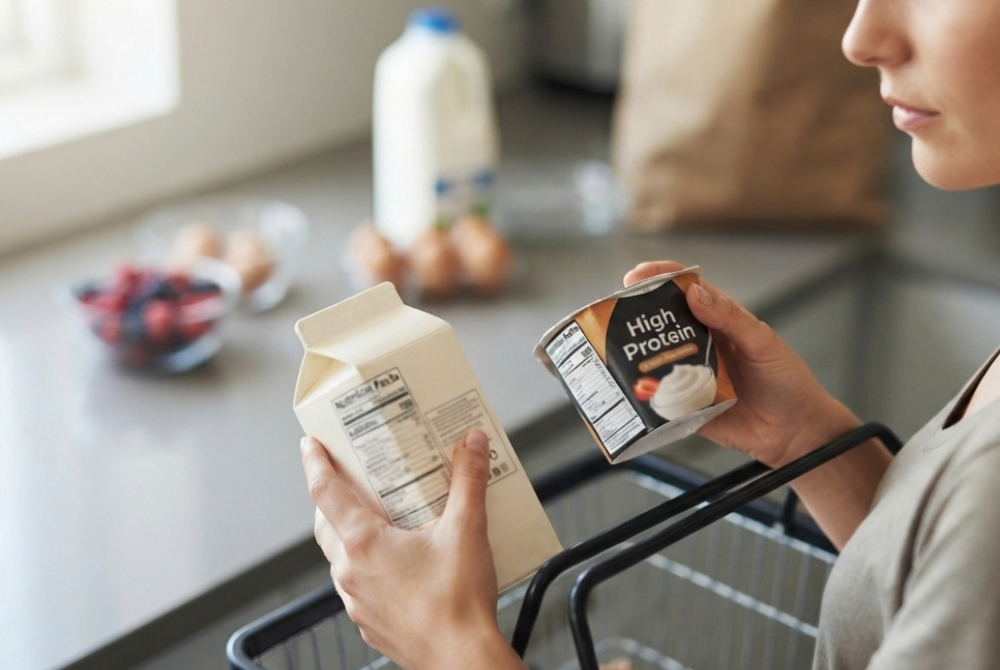
PETALING JAYA: A dietitian has cautioned that products labeled as “high protein” may not necessarily offer better nutritional value compared to regular options. Rozanna M. Rosly, a clinical dietitian at UM Specialist Centre, highlighted that the term protein has become a popular marketing tool, appearing in a variety of items including yogurt, cereal, drinks, and desserts.
Read More
Rozanna explained that while these protein-enriched products can be convenient, consumers should not assume that they are inherently healthier. She emphasized that the high protein label reflects just one nutritional aspect and does not guarantee overall health benefits.
The trend toward high-protein items may cause people to neglect other essential dietary components. For instance, adding protein to a biscuit does not enhance its nutritional profile. Research indicates a “health halo” effect associated with the term protein, where consumers mistakenly view such products as more nutritious, despite potentially higher sugar, sodium, and calorie counts.
To make informed choices, Rozanna advised consumers to read the nutrition information panel and ingredient list instead of focusing solely on the highlighted protein claims. Key factors to consider include the amount of protein per serving, serving size, and the levels of sugar, saturated fat, sodium, fiber, and total calorie content in the product.
She pointed out that while some high-protein items come with a significant price increase, ordinary foods can provide similar protein levels at a lower cost while also offering additional nutrients. For example, eggs and fish not only supply protein but also essential vitamins and minerals, while milk, yogurt, tofu, tempeh, and legumes offer protein alongside other nutritional benefits.
However, Rozanna acknowledged that protein-enriched foods are not entirely to be avoided. They may be beneficial for individuals who need extra protein or have difficulty consuming adequate nutrition. The concern arises when people with sufficient diets opt for protein-rich versions merely due to marketing claims.
Rozanna encouraged consumers to evaluate not just the protein content of a product, but also its overall value and what it might replace in their diets. She cautioned against viewing protein intake as a competition, advising that while protein is vital, it is not necessary to consume it in excess. Ultimately, she urged consumers to assess food holistically rather than being swayed by isolated nutritional labels.