The 2025–2030 Dietary Guidelines for Americans (DGAs) were released this week, promoting the message to “eat real food” and advocating for stricter limitations on added sugars and highly processed foods.
Read More
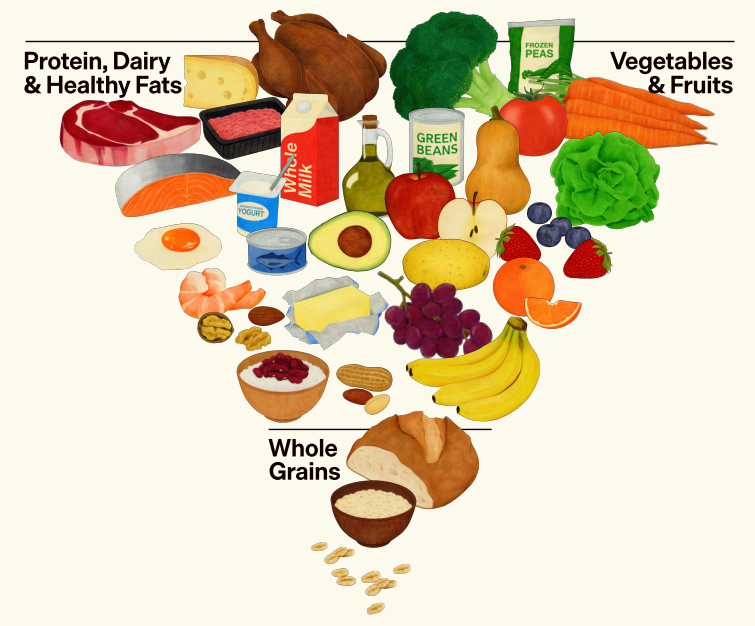
This edition features a new pyramid-like graphic that places emphasis on foods like steak, full-fat milk, and butter. Despite this visual focus, the Guidelines maintain the long-standing recommendation that saturated fat should not exceed 10% of total daily calories.
Frank Hu, professor and chair of the Department of Nutrition at Harvard T.H. Chan School of Public Health, stated that while the DGAs make a positive move by highlighting the need to reduce added sugars and processed foods, there are contradictions within the Guidelines and between the Guidelines and the new pyramid. The mixed messages regarding saturated-fat-rich foods could lead to confusion and increased intake of saturated fat, potentially raising LDL cholesterol levels and cardiovascular risk.
The largest section of the pyramid appropriately features vegetables and fruits, though Hu noted that whole grains are depicted less prominently, despite the recommendation of 2-4 servings per day.
For the first time, the DGAs explicitly address “highly processed foods,” advising against sugar-sweetened beverages and high-sugar or high-sodium packaged snacks. The guidance encourages whole, fiber-rich grain options while reducing the intake of refined carbohydrates like white bread.
The new DGAs assert a strict stance on added sugars, stating that no added sugars or non-nutritive sweeteners are recommended as part of a healthy diet. They suggest that meals should contain no more than 10 grams of added sugars, a decrease from the previous guideline of 10% of daily calories from added sugars. Furthermore, children are now advised to avoid added sugars until age 10, an increase from the previous recommendation of avoiding them until age 2.
The DGAs maintain existing guidelines regarding saturated fat consumption, advising that it should remain below 10% of total daily calories. However, the guidance somewhat confusingly categorizes animal-based foods high in saturated fat—like meats and full-fat dairy—with plant-based foods that are low in saturated fat. The pyramid's representation of steak, cheese, whole milk, and butter raises questions about which types of these foods should be consumed more regularly to stay within the recommended limits.
In practical terms, on a 2,000-calorie diet, the 10% limit amounts to approximately 22 grams of saturated fat. The recommendations suggest 3 servings of dairy daily, which could quickly exceed the limit if full-fat options are consumed. For instance, an 8-ounce cup of whole milk contains 5 grams of saturated fat, along with similar amounts from other dairy options.
While the pyramid mentions olive oil as a healthy fat, Dr. Hu pointed out that it is not the best source of essential fatty acids compared to other plant oils. The guidelines also suggest increased protein consumption for adults, recommending 1.2 to 1.6 grams of protein per kilogram of body weight daily, which is significantly higher than previous recommendations. However, there is a lack of clarity on protein quality, especially as many in the U.S. already consume sufficient protein.
The DGAs advise drinking less alcohol but lack specific guidelines on what this means. Additionally, they do not address the environmental impacts of dietary choices, which could hinder comprehensive dietary planning.
In summary, while the new Guidelines reinforce the importance of limiting added sugars and processed foods and align with existing consensus on saturated fat limits, contradictions and ambiguities remain. The new pyramid graphic raises concerns due to the emphasis on animal products high in saturated fat. As public adherence to dietary guidelines has historically been low, it remains uncertain whether this update will lead to better compliance. Those seeking clarity are encouraged to consult resources like the Healthy Eating Plate or a registered dietitian.
The DGAs, updated every five years by the U.S. Departments of Agriculture (USDA) and Health and Human Services (HHS), were developed after an independent group summarized current nutrition science. This cycle saw the Committee's earlier report rejected by the administration, prompting a supplemental analysis that some critics have deemed less transparent.