The Dietary Guidelines for Americans (DGAs) are updated every five years and provide the foundation for U.S. federal food and nutrition policy. The 2025–2030 edition has raised alarms for potentially harming human and planetary health, particularly due to recommendations for increased consumption of high-protein foods, especially meat and dairy. This shift contradicts guidance from the 2025 Dietary Guidelines Advisory Committee (DGAC), which urged limits on meat intake.
Read More
The federal government reportedly disregarded nearly half of the DGAC's evidence-based recommendations. Instead, a separate group of nine nutrition scholars, many with ties to the beef and dairy industries, emphasized higher meat and full-fat dairy consumption. Leading medical organizations warn these guidelines may increase cardiovascular disease risk and contradict the scientific foundation initially provided by the DGAC.
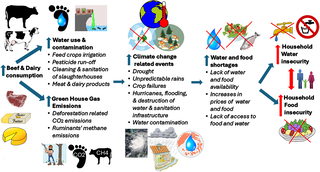
The new DGAs fail to address the adverse effects of these recommendations on climate change and global food and water insecurity. Current livestock farming practices are major contributors to greenhouse gas emissions, deforestation, and water pollution. These environmental consequences further exacerbate food and water insecurity, which are interconnected issues.
By 2050, the global population is projected to reach nearly 10 billion, necessitating a 70% increase in food production. Food-related greenhouse gas emissions could rise by 80% if existing trends continue. Meat production contributes significantly to these emissions, with beef being notably unsustainable. It requires significantly more land and water compared to other protein sources. Farming animals demands over 80% of global agricultural land and contributes to a range of environmental issues, including severe water insecurity due to excessive water usage and pollution.
Failure to implement dietary shifts could make achieving the targets of the Paris Agreement increasingly difficult, as current trajectories point towards unsustainable increases in livestock-related emissions. In contrast, adopting predominantly plant-based diets could reduce food-related greenhouse gas emissions significantly, while also improving agricultural productivity and reducing food waste.
The exclusion of sustainability considerations in the latest DGAs is notable, especially since the U.S. is among the highest consumers of beef and dairy worldwide. While many nations have successfully integrated sustainability into their dietary guidelines, the U.S. continues to rely on a framework that overlooks the critical links between diet, public health, and planetary health.
Ultimately, the new DGAs risk exacerbating environmental degradation and underscore the urgent need for the U.S. government to recognize and act on the evidence linking dietary choices to both public and planetary well-being.