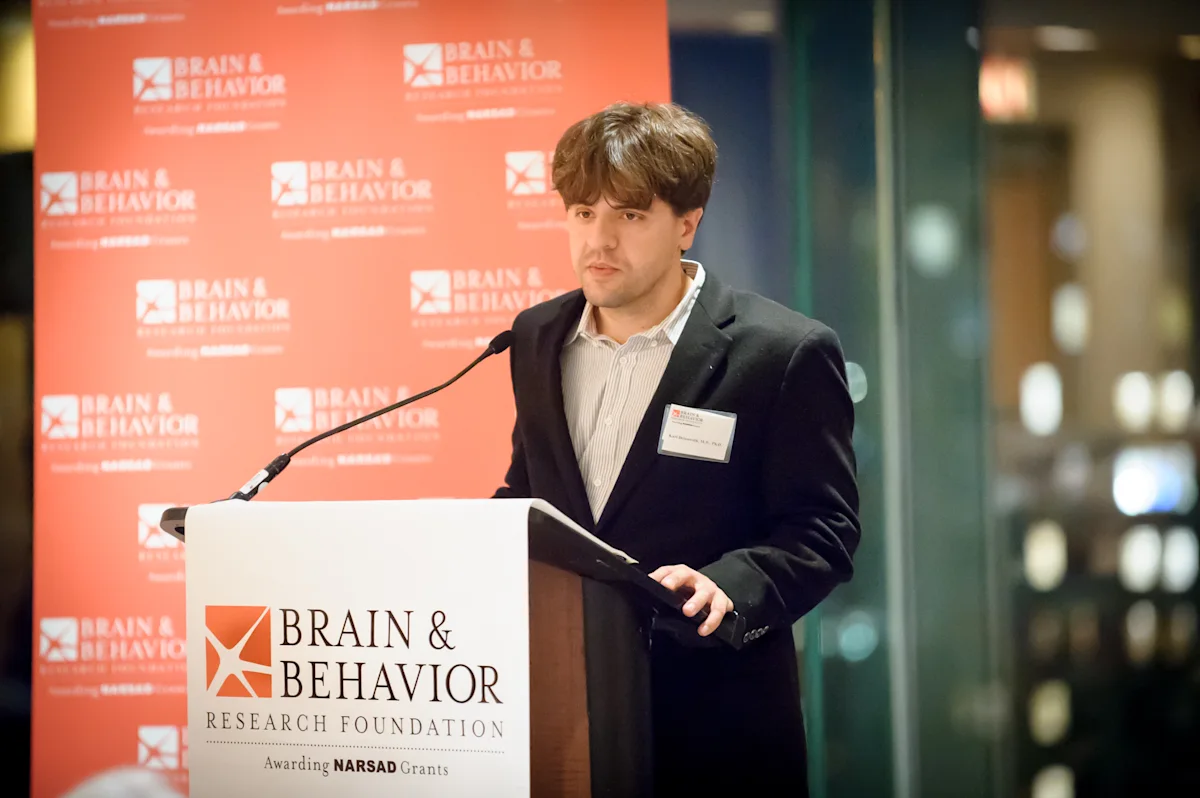
The Brain & Behavior Research Foundation (BBRF) has congratulated Dr. Karl Deisseroth, M.D., Ph.D., on being awarded the 2026 Nobel Prize in Physiology or Medicine for his groundbreaking work in optogenetics. The award recognizes Dr. Deisseroth alongside Peter Hegemann, Ph.D., and Georg Nagel, Ph.D., for their significant discoveries related to light-gated ion channels, a technology that allows researchers to control specific brain cells with light.
Read More
BBRF's recognition is especially significant as Dr. Deisseroth received the foundation's Young Investigator Award in 2005 and 2007 while establishing his laboratory. He joined the BBRF Scientific Council in 2008 and was awarded the 2013 Goldman-Rakic Prize for Outstanding Achievement in Cognitive Neuroscience. Reflecting on his early support from BBRF, Dr. Deisseroth stated that the organization's funding helped him pursue innovative and risky ideas.
Jeffrey Borenstein, M.D., President & CEO of BBRF, expressed enthusiasm over Dr. Deisseroth's Nobel recognition, emphasizing the importance of investing in promising scientists and transformative research. He noted that BBRF was privileged to support Dr. Deisseroth during the early stages of his career, contributing to research that has reshaped the field of neuroscience.
Optogenetics has revolutionized how scientists investigate the influence of specific cells and neural circuits on behavior, becoming an essential tool for studying brain function in both health and disease. Dr. Deisseroth has also appeared on the PBS series Healthy Minds with Dr. Jeffrey Borenstein, produced by BBRF.
BBRF is dedicated to awarding research grants that aim to improve treatments and preventions for various mental illnesses, having invested over $487 million since its inception in 1987 to support more than 5,900 scientists worldwide.