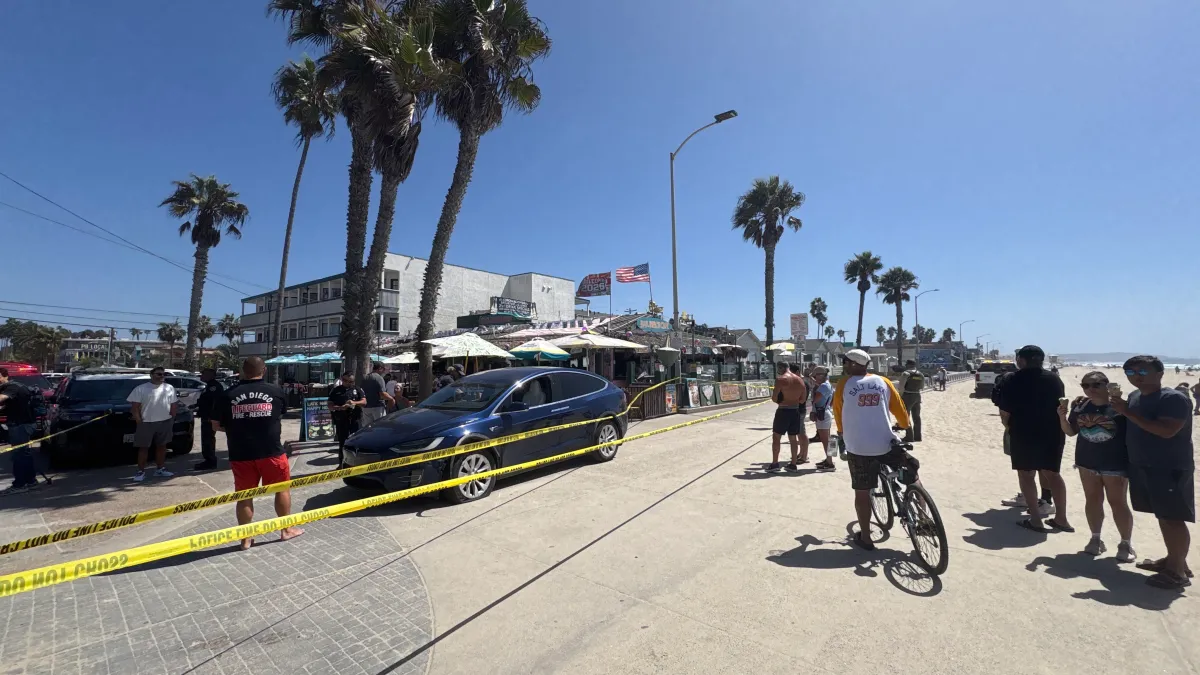
In 2025, judges in San Diego County granted mental health diversion in hundreds of felony cases, according to data from the San Diego County District Attorney’s Office. This issue gained attention after a suspect drove a stolen Tesla down the Pacific Beach boardwalk, where he struck a 25-year-old woman at the intersection of Thomas and Reed Avenues, an incident captured on video.
Read More
The driver, identified as 39-year-old Juan Gonzaba, should have been in custody awaiting trial for three previous felony cases but was allowed to remain free through the mental health diversion program.
Mental health diversion enables individuals diagnosed with mental disorders to avoid jail time in exchange for completing treatment programs. If successful, participants can keep their criminal records clean.
Data obtained by NBC 7 Investigates revealed that in 2025, defendants requested mental health diversion 533 times, primarily for felony charges. Of the 467 felony cases that sought diversion, judges approved 333, approximately two-thirds of the requests. In 31 instances, prosecutors agreed with the defense on the merit of community-based treatment over incarceration.
Since its statewide enactment in 2019, mental health diversion has impacted thousands of cases, though certain serious crimes, such as murder and sexual assault, are ineligible.
The San Diego County District Attorney’s Office has expressed concerns, suggesting that the program may compel judges to release potentially dangerous defendants. Deputy District Attorney Matthew Greco, who manages these cases, stated that while treatment is essential, public safety must also be a priority. He indicated that a new state law allowing judges more discretion regarding the potential for reoffending is a positive step.
Conversely, public defenders argue that the program is effective. Kate Chatfield from the California Public Defenders Association noted its success, highlighting that recidivism rates are higher among defendants who do not receive diversion. Statistics from the District Attorney’s Office show that about 74% of those who received diversion in 2025 had not reoffended by August 2026.
Many misdemeanors in California do not necessitate pre-trial custody or bail, leading some defendants who qualify for mental health treatment to evade court appearances.
The forthcoming changes to the diversion program, starting in January, will be observed for their potential effects on case numbers. Following the incident, Gonzaba was ordered by a judge to remain in jail without bail.