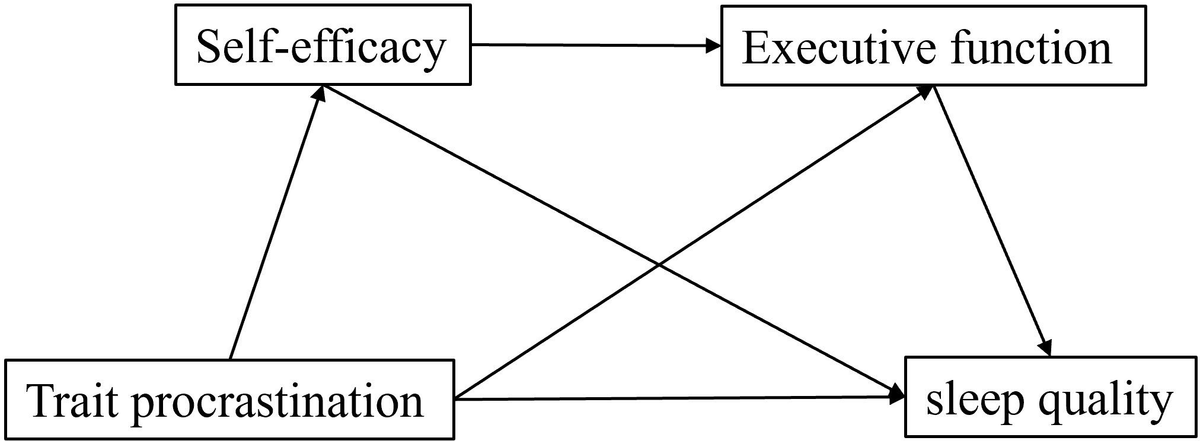
A recent study examined how trait procrastination affects sleep quality among college students, focusing on the roles of self-efficacy and executive function as mediators. The research, conducted with 745 undergraduate students in Changchun, China, revealed that higher levels of trait procrastination were significantly linked to poorer sleep quality, lower self-efficacy, and impaired executive function.
Read More
Using validated questionnaires, the researchers assessed procrastination, self-efficacy, executive function, and sleep quality. The findings indicated that procrastination negatively impacted sleep quality both directly and indirectly through self-efficacy and executive function. Notably, self-efficacy was found to mask the adverse effects of procrastination on sleep quality, suggesting a complex interplay between these variables.
The study highlighted that college students frequently face pressures from academic demands and distractions from digital media, which contribute to procrastination behaviors. This chronic procrastination can lead to feelings of frustration and a decrease in confidence, further compounding sleep issues.
Through a chain mediation model, the research established that while self-efficacy had a slight counteractive effect on procrastination and sleep, executive function was a stronger mediator. The results reinforce the importance of addressing executive function in interventions aimed at improving sleep quality for students struggling with procrastination.
The researchers advocate for programs targeting executive function improvements to help students enhance their sleep quality. Furthermore, maintaining a balanced sense of self-efficacy may assist in combating the negative consequences of procrastination on sleep.
Published in Frontiers in Psychiatry, this study contributes valuable insights into the relationship between procrastination, self-efficacy, executive function, and sleep quality, especially in the context of demanding college environments.