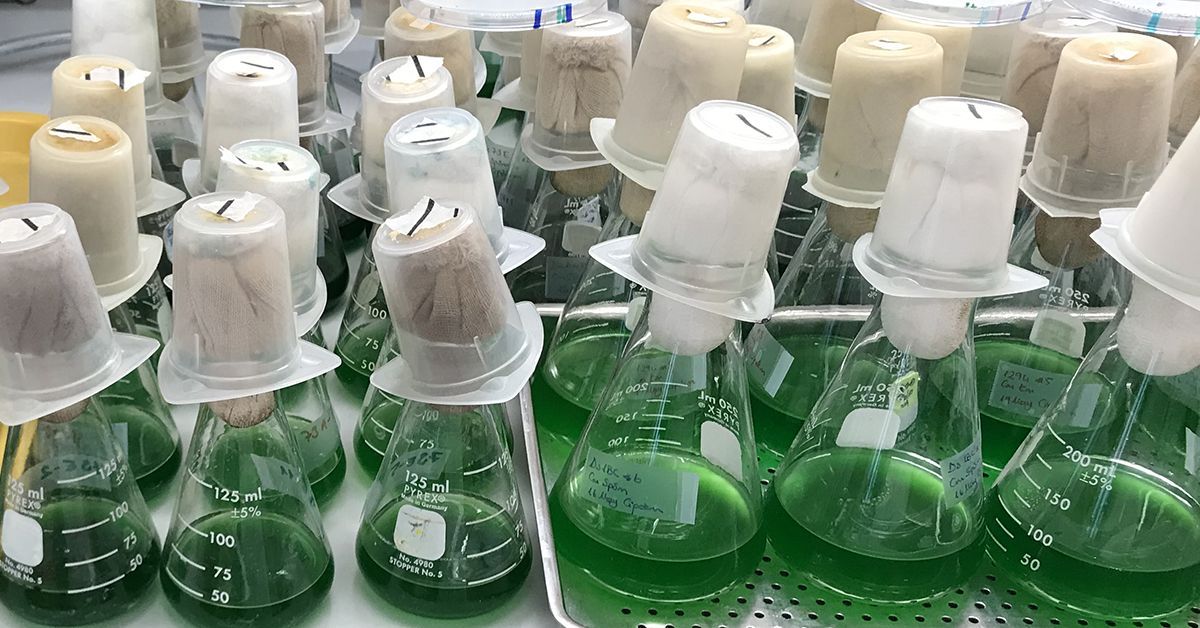
Researchers at the University of California San Diego have made significant strides in understanding the circadian clocks of cyanobacteria, tiny organisms also known as blue-green algae. Their findings, published in the journal Nature Structural and Molecular Biology, detail how these clocks precisely regulate the expression of various genes throughout the 24-hour day.
Read More
The study highlights the importance of circadian rhythms, which play a crucial role in health and well-being by aligning biological cycles with light and dark exposure. Disruptions to these rhythms, such as those caused by jet lag or daylight saving time, can negatively impact daily functioning.
The research team, which includes members from UC San Diego’s Department of Molecular Biology and the Center for Circadian Biology, along with colleagues from Newcastle University in the UK, uncovered the mechanisms linking critical components of the cyanobacterial clock to the rhythmic expression of genes. Senior author and Biological Sciences Distinguished Professor Susan Golden stated that a single signal from the clock can activate one set of genes while turning off another, leading to opposing phases of gene expression within the cells.
The researchers demonstrated that when the transcription factor RpaA is modified by the addition of a phosphate group, it influences DNA binding in a way that can block or enable transcription of target genes, thereby controlling gene activity in a daily rhythm.
This study contributes to a growing interest in circadian biology, particularly regarding its implications for health and medicine. Medications and vaccines show varying effectiveness depending on the time of day they are taken, prompting UC San Diego to establish the Stuart and Barbara L. Brody Endowed Chair in Circadian Biology and Medicine, currently held by Amir Zarrinpar.
The research identified the minimal elements necessary for circadian gene transcription in cyanobacteria, simplifying the understanding of complex circadian systems. First author Mingxu Fang noted that rebuilding this clock requires just six proteins, allowing for the potential innovation within the field of synthetic biology.
Coauthor Kevin Corbett emphasized that this cyanobacterial clock is independently evolved, making it distinct from circadian systems found in humans and other eukaryotes. Advanced techniques such as cryo-electron microscopy played a crucial role in their discoveries, conducted at UC San Diego's Goeddel Family Technology Sandbox.
Utilizing their knowledge of the core clock mechanisms, the research team successfully created a synthetic gene expression system that can rhythmically control gene activation. This approach may be adapted for use in other bacteria, like Escherichia coli, facilitating the biosynthesis of valuable biological products across various microbial platforms.
Yulia Yuzenkova from Newcastle University noted the remarkable simplicity of the molecular clocking mechanisms that can coordinate complex cellular activities into rhythmic patterns. This research enhances the understanding of biological rhythms and opens avenues for applications in both microbial biotechnology and human health.
The study involved contributions from Mingxu Fang, Yajie Gu, Miron Leanca, Mariusz Matyszewski, Andy LiWang, Yulia Yuzenkova, Kevin D. Corbett, and Susan S. Golden. It was funded by the National Institute of General Medical Sciences of the National Institutes of Health and the Biotechnology and Biological Sciences Research Council.