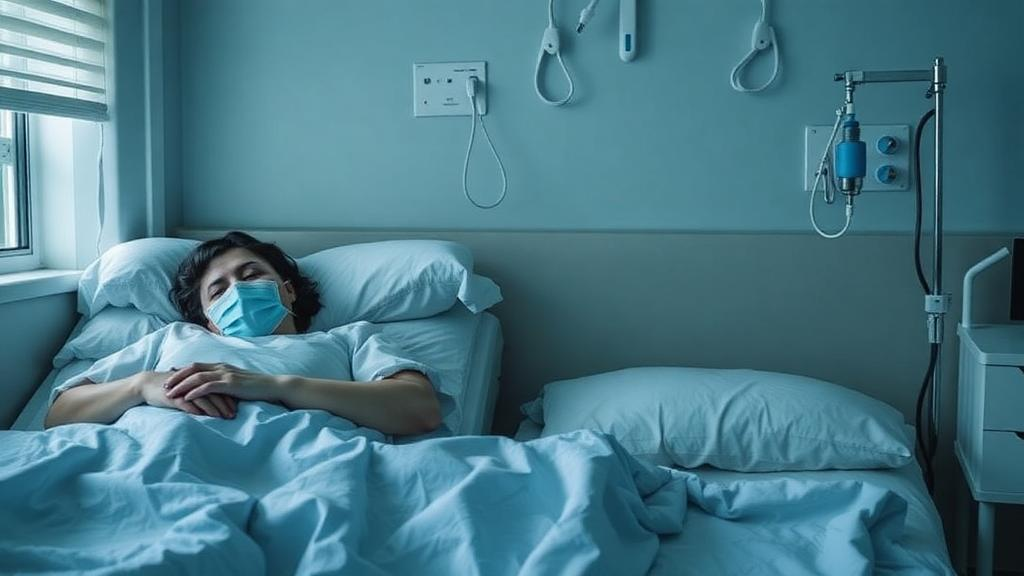
A study published in BMC Nursing by Jie Peng from the First People’s Hospital of Yulin and colleagues examines the impact of sleep quality and social connections on the safety practices of nurses. Through survey data from 418 nurses and interviews with 23 more, the research explores how these factors influence adherence to safe protocols in patient care.
Read More
The study is based on the Job Demands–Resources model, which categorizes workplace conditions into 'demands' and 'resources.' Job demands include factors such as heavy workloads and lack of sleep, while job resources encompass support systems like social connections. The findings show that a nurse’s personal social network serves as a measurable job resource, which interacts with sleep quality, a job demand.
Between June and December 2024, researchers recruited participants via convenience sampling and conducted face-to-face surveys. They used the Pittsburgh Sleep Quality Index to evaluate sleep quality and assessed social connections through ego-network degree centrality. The Nurses’ Safety Behavior Questionnaire gauged safety practices among participants. Using structural equation modeling software, the researchers found significant relationships: higher social network connectivity was linked to better safety practices, indicated by a standardized coefficient of 0.317, while poorer sleep correlated with lower safety behaviors, evidenced by a coefficient of -0.184, both significant at p < 0.001.
The study also investigated mediation effects. It revealed that poor sleep resulted in lower ego-network degree centrality and diminished perceived social support, both of which correlated with poorer safety behavior. This identified a pathway where inadequate sleep led to weaker social networks, lower perceived support, and ultimately less safe nursing practices. Together, these factors explained 8.11 percent of the connection between sleep quality and safety behavior.
While this percentage may appear modest, it highlights meaningful implications for occupational safety. Most safety issues stem directly from fatigue, as sleep-deprived nurses are more prone to mistakes. The research suggests that poor sleep may hinder social engagement, impacting nurses’ interactions on the job and reducing informal safety checks.
To further understand these dynamics, the researchers conducted interviews with selected nurses between January and February 2025. Analysis of the qualitative data supported the quantitative findings, indicating that fatigue and poor sleep negatively impacted nurses' capacity for careful attention to safety, while supportive relationships restored their engagement.
The study adheres to GRAMMS guidelines and blends quantitative and qualitative methods effectively. It received ethics approval from the First People’s Hospital of Yulin and was supported by the Humanistic Nursing Committee of the China Association for Life Care.
Limitations of the study include its cross-sectional design, which cannot establish causation, and potential biases in self-reported data. Despite these limitations, the authors emphasize that sleep quality is a job demand affecting safety behavior, while social support functions as a mediating resource.
The findings suggest that hospitals should consider interventions to improve nurses' sleep—such as adjusted schedules and educational programs on sleep hygiene—and foster social networks through structured peer support systems. As healthcare systems face ongoing nurse shortages and burnout, a focus on enhancing sleep quality and social connections may lead to safer patient care.