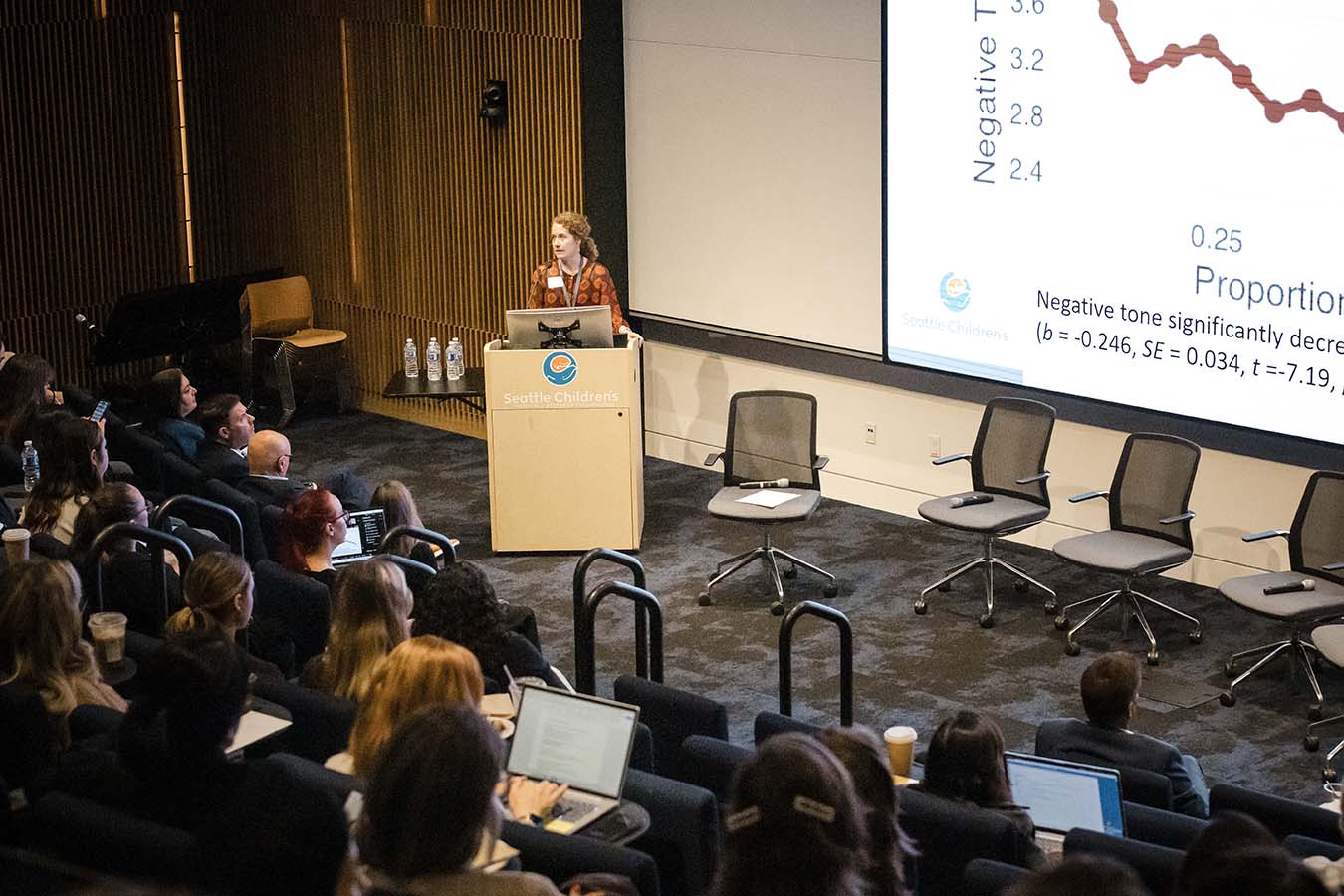
On May 22, 2026, Seattle Children’s Research Institute held its second annual Pediatric Mental and Behavioral Health Research Summit at the B. Wayne Hughes Building in downtown Seattle. The event brought together over 200 healthcare providers, researchers, policymakers, community leaders, and students, all focused on using evidence-based data to tackle the youth mental health crisis.
Read More
Key attendees included Francesca Vega, Vice President of External Affairs & Community Relations; Vittorio Gallo, PhD, Chief Scientific Officer; Tonya Palermo, director of the Center of Child Health, Behavior and Development; Washington state senator Manka Dhingra; Christopher Longhurst, MD, MS, Chief Executive Officer; and Ray Hsiao, MD, Chief of Psychiatry.
This year’s summit placed a significant emphasis on suicide and self-harm prevention, building on the prior year’s discussions about broader behavioral interventions. Presentations from Seattle Children’s researchers unveiled clinical interventions designed to better protect vulnerable youth. Attendees learned about universal screening frameworks that aim to identify at-risk youth in primary care settings, schools, and emergency departments.
Notable presentations included:
- Molly Adrian, PhD, discussing early implementation results from a clinical trial on treatment strategies for adolescent suicide care.
- Cari McCarty, PhD, on text-based teen-to-teen helplines.
- Janis Sethness, MD, MPH, addressing the use of large language models to identify suicide and substance use overdose risks.
- Kym Ahrens, MD, on overdose prevention among youth in the legal system.
- Nicole Kahn, PhD, and Gina Sequeira, MD, MS, on suicide screening in an adolescent gender clinic.
- Alice Ellyson, PhD, discussing the risks associated with access to firearms.
The summit featured a keynote address by Dr. Jeff Bridge, director of the Center for Suicide Prevention and Research at the Abigail Wexner Research Institute. He presented findings from the ongoing effectiveness-implementation trial of an approach aimed at reducing suicide risk in pediatric primary care settings.
In addition to lectures, the summit facilitated collaborative discussions, allowing clinical researchers, community leaders, and advocates to address issues such as workforce shortages and financial sustainability in mental health care. Forum attendees were equipped with frameworks to integrate behavioral healthcare into various settings, aiming for a coordinated system of support.
Participants expressed optimism about the event's potential impact, emphasizing the importance of connecting research insights to real-world applications for improving youth mental health.