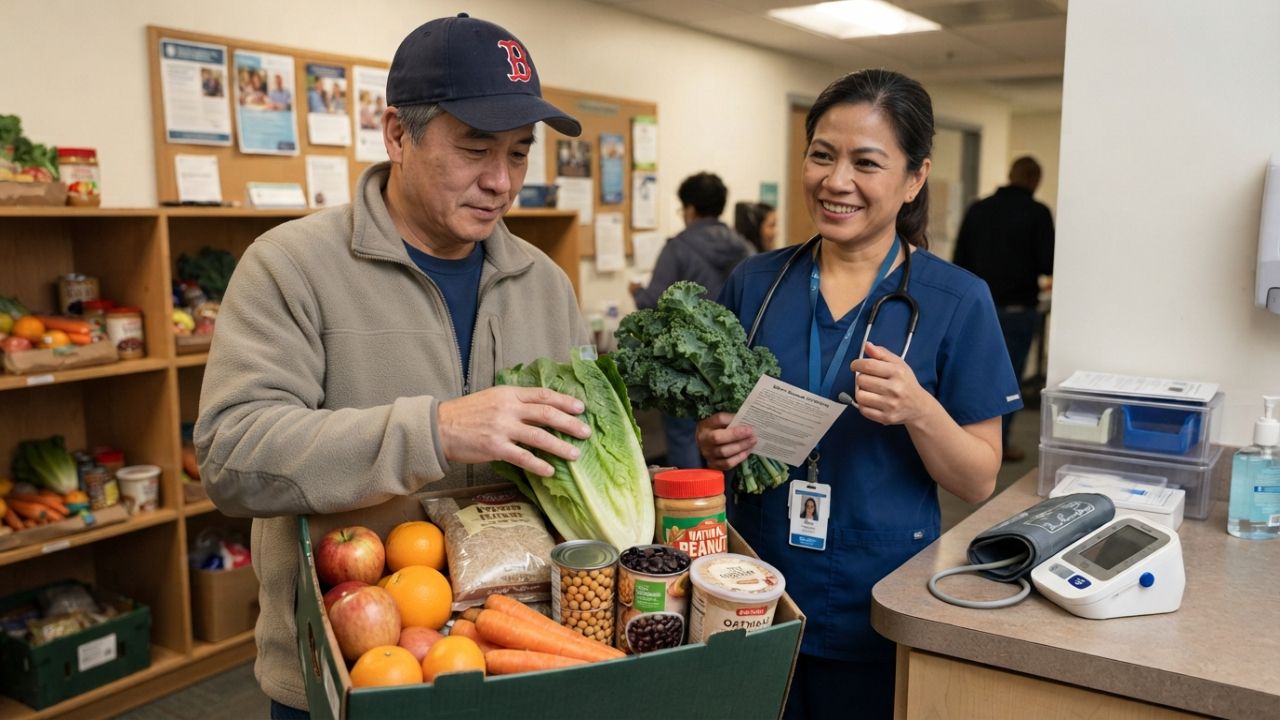
A study involving 68 adults picking up free plant-based groceries weekly at the Mass General Brigham Revere Community Health Center in Massachusetts found that participants experienced reductions in both blood pressure and weight over nearly three years. The study was published on October 1 in the CDC's journal Preventing Chronic Disease.
Read More
This research highlights significant implications for the many Americans struggling to afford nutritious food while managing high blood pressure. According to CDC data from 2017 to March 2020, nearly 48.1% of U.S. adults have high blood pressure, and only about 22.5% have it controlled. Most participants in this study were insured through public programs, raising questions about whether Medicaid and similar programs should cover groceries as a form of healthcare.
The study's limitations include its small size and the lack of a comparison group, making it an observational study that suggests rather than proves a causal relationship between food packages and health improvements.
The Revere Pantry provides grocery boxes designed by a dietitian based on the USDA's 2020 Dietary Guidelines, which include fresh fruits, vegetables, canned beans or nut butter, and whole grains sufficient to support three meals daily for households. Families receive between 20 to 60 pounds of food weekly, contingent upon family size. The pantry sources its food from organizations including the Greater Boston Food Bank, which has supplied nearly 379,000 pounds of food to the center this year.
Participants had to receive at least 26 packages between December 2019 and April 2025, and have their blood pressure, weight, or blood sugar measured before and afterward. On average, the participants were 57 years old, with nearly 70% being women and approximately 37% identifying as Hispanic or Latino.
Data revealed that for every 100 packages received, participants showed a decrease in diastolic blood pressure by 3.21 mm Hg, a weight loss of 2.63 kilograms (approximately 5.8 pounds), and a decline in body mass index by 1.04 points. The most pronounced blood pressure decreases occurred among those starting with higher baseline readings. However, changes in blood sugar levels remained negligible.
Dr. Jacob Mirsky, the study's first author and medical director of the food pantry, noted that this research could shift perspectives on