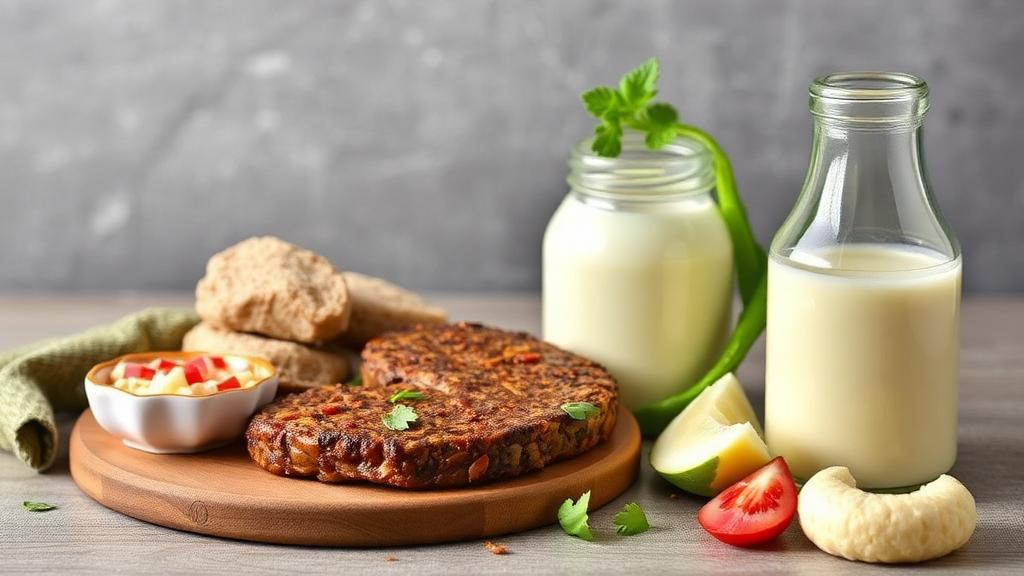
The market for plant-based food alternatives is rapidly expanding across Europe, but a new analysis reveals significant variations in nutritional quality among these products. Researchers at the European Commission’s Joint Research Centre in Ispra, Italy, conducted a comprehensive study on packaged foods marketed as plant-based analogues to meat, seafood, and dairy products. Published in BMC Medicine, their findings indicate that while the market has grown considerably over the past fifteen years, the nutritional profiles of these products differ widely.
Read More
The researchers utilized two extensive European food databases: Euromonitor’s Passport, which provides commercial market insights, and EuroFIR’s FoodEXplorer, which compiles compositional data across national food tables. This enabled them to trace market volumes from 2009 to 2024 and evaluate the macronutrient profiles of available products. Nutritional quality was assessed using the Nutri-Score and Multiple Traffic Light labeling schemes, as well as examining compliance with EU nutrition claim regulations.
The study reported a substantial increase in market volume, with dairy analogues tripling and meat and seafood analogues growing about sevenfold from 2009 to 2024. This growth reflects rising consumer interest in flexitarian diets, concerns over livestock production, and investments by food manufacturers in enhancing the taste and texture of meat and dairy substitutes. However, the authors warn that this expansion has not led to consistent product quality and that the category “plant-based” encompasses a wide variety of foods.
Significant variation in protein content was observed across all product categories, particularly among plant-based cheeses, some of which contained little to no protein. This raises concerns for consumers who might assume these products provide comparable nutrition to dairy cheese, a key protein source in European diets. The variability is attributed to differences in formulation, with some products made from protein-rich bases such as pea or soy, while others rely heavily on starches and oils.
The Nutri-Score results, which classify foods on a scale from A to E based on their nutritional quality, showed that nearly half of the meat and seafood analogues received A or B ratings, indicating they rank among the healthier packaged foods. In contrast, dairy alternatives displayed significant variability in their scores, largely influenced by added sugars and fats. Notably, all cheese analogues scored D or E, reflecting high levels of total and saturated fat and salt, paralleling some of the less healthy attributes of the cheeses they imitate.
The Multiple Traffic Light system further emphasized high salt levels across many analogue categories. While plant-based foods are frequently perceived as healthier, the processing involved in transforming plant ingredients into animal product substitutes often adds significant amounts of sodium and other additives, undermining their health halo.
Conversely, over 60% of meat and seafood analogues met the legal criteria for high protein and low saturated fat claims, indicating that many in this fast-growing category do offer desirable nutritional attributes. Compared to their animal counterparts, plant-based alternatives consistently contain more dietary fiber and less total and saturated fat, aligning with dietary recommendations that link saturated fat to cardiovascular disease risk.
However, the study highlighted concerns about protein content and variable levels of sugar and salt, which can differ widely among products. The authors pointed out that a consumer substituting meat with a low-protein, high-salt analogue might benefit from increased fiber but could worsen nutritional deficiencies elsewhere in their diet. Nutritional outcomes depend heavily on specific product formulations rather than merely the plant-based label.
The researchers concluded that while the plant-based analogue market is expanding, the contribution of these products to healthy diets is not guaranteed without improvements in formulation, particularly in protein content and reductions in harmful ingredients. They call for targeted reformulation to enhance product quality and health impacts. This study fills a critical data gap on the nutritional quality of plant-based products in the EU, serving as a baseline for regulators, public health agencies, and manufacturers as the sector continues to evolve.