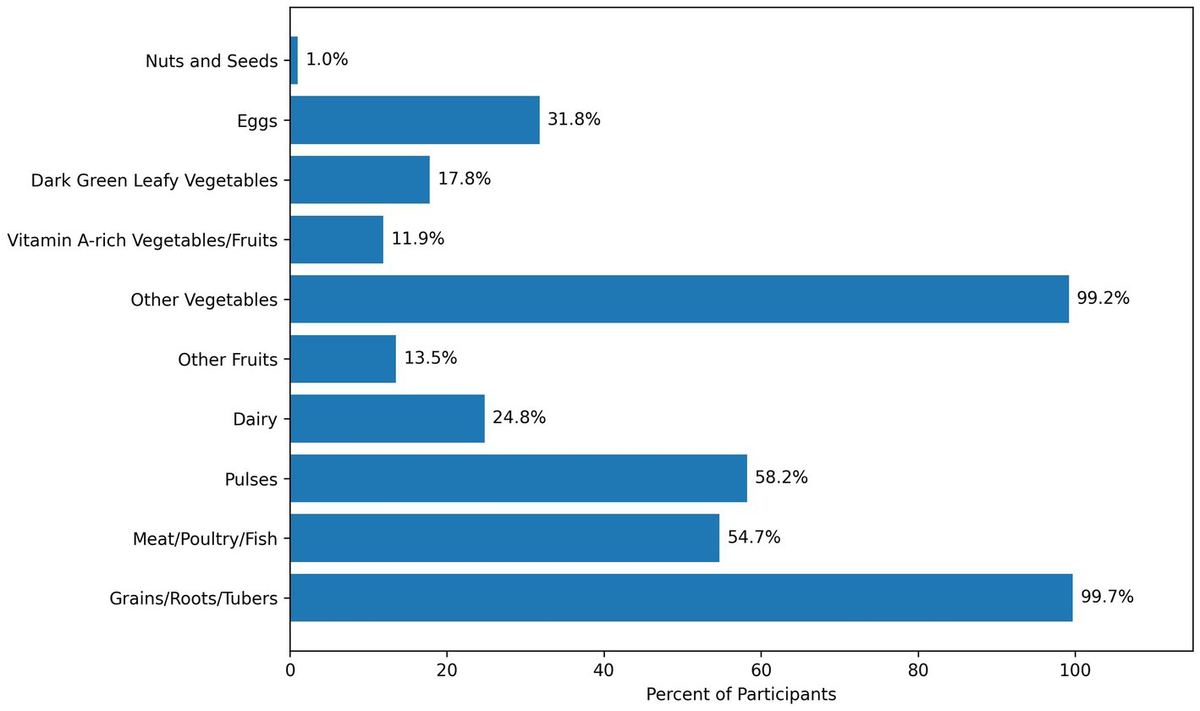
A recent study assessed dietary diversity, nutrition knowledge, and attitudes among adolescent students in Addis Ababa, Ethiopia. Conducted between January and February 2024, the cross-sectional survey involved 371 adolescents aged 14 to 19 from both public and private secondary schools.
Read More
The study found that only 33.7% of adolescents achieved adequate dietary diversity, defined as consuming five or more food groups. The majority of participants regularly consumed cereals, but their intake of fruits, vegetables, and animal-source foods was notably low. On average, students scored 11.27 out of 25 on nutrition knowledge assessments, with over half scoring below the mean and having significant gaps in knowledge about micronutrient-rich foods.
Attitudes toward nutrition were mixed, as 52.7% of participants demonstrated favorable attitudes based on the average score of 60.6. Factors influencing dietary diversity included socioeconomic status, with students from private schools reflecting higher diversity in their diets. Furthermore, adolescents with fathers and mothers who attained higher education exhibited better dietary diversity.
The study highlighted the pressing need for targeted school-based interventions that integrate nutrition education and improve the overall food environment to promote healthier dietary behaviors for adolescents in urban Ethiopia.