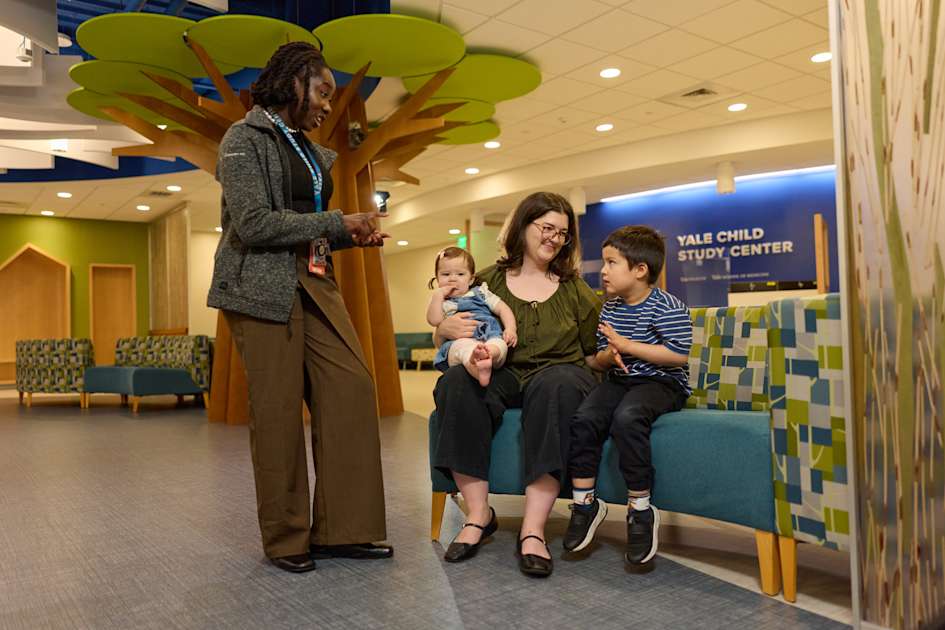
Many families experience anxiety, sadness, or behavioral changes when seeking help for their children, and reaching out for support can provide relief. The Yale Child Study Center (YCSC) emphasizes a developmental, family-centered approach in addressing children's behavioral health needs. In a recently produced video by Yale School of Medicine, YCSC experts discuss their services and the interconnected missions of clinical care, research, and education under the theme “discovery inspires care.”
Read More
Yann Poncin, MD, notes that families often approach the center during vulnerable times, where empathy and expertise are crucial. Signs of distress in children can manifest as increased worry, sadness, irritability, or sleep difficulties. Some families may initially feel hesitant or anxious about seeking help, but support is typically a process rather than a one-time conversation. Linda Mayes, MD, underscores that understanding a child's development is essential, highlighting that clinicians aim to meet children at their emotional and developmental stages.
During initial visits at YCSC, the focus is on listening and understanding the child's and family's experiences. Clinicians strive to obtain a comprehensive view of the situation, as Thomas Fernandez, MD, explains, noting that it is important to consider the context in which concerns arise.
Parents and caregivers are encouraged to be supportive even if they do not have all the answers. Simple daily routines and relationships play a significant role in a child's long-term well-being. Tara Davila, LCSW, emphasizes the connection between early childhood experiences and adult outcomes, while Poncin highlights developmental markers such as successful school attendance, friendships, and a sense of competence in life.
School environments are pivotal for children’s growth, combining learning, socialization, and stress management. Mayes states that children thrive in their communities, which include schools, pediatricians, and other care providers. Coordinated support across home and school settings is crucial for effective intervention.
At YCSC, the involvement of family is integral in treatment planning. Fernandez explains that the center’s mission involves collaborating with families to help children reach their fullest potential. Clinicians recognize that the behaviors of children can vary at different developmental stages; what is typical for a five-year-old may not be appropriate for a twelve-year-old. This perspective informs the tailored support provided, especially for adolescents with individual needs, such as those on the autism spectrum.
Julie Wolf, PhD, leads a social group for teens with autism, focusing on their input to ensure the skills practiced are meaningful to them. The overarching message conveyed through the YCSC's work is one of hope, as many families worry they have waited too long to seek assistance. Poncin reassures families that asking for help signifies strength, not failure, and acknowledges that clinicians learn from their experiences with families.
The YCSC advocates for children and families by promoting the idea that investing in children's mental health benefits society as a whole. The Center's mission blends research, clinical practice, and training for mental health professionals, contributing significantly to the field of child and adolescent mental health.