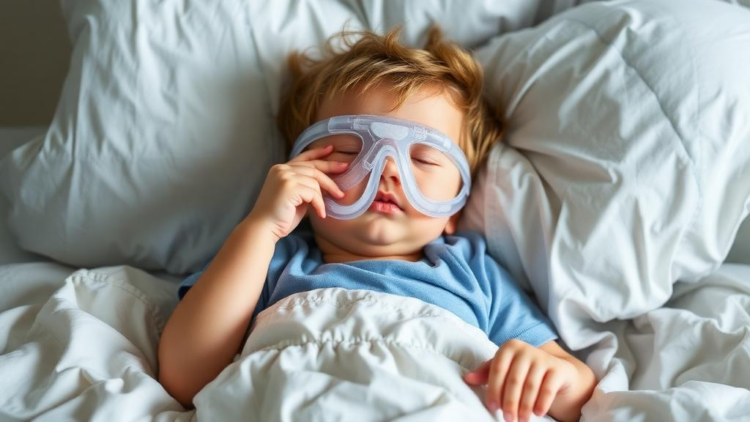
A new prospective study from Mayo Clinic researchers, published in the Journal of Clinical Sleep Medicine, assesses the effectiveness of a ring-worn sleep apnea test designed for children aged two to six years. The study determined that this photoplethysmography-based device, intended to detect obstructive sleep apnea, is technically inadequate and diagnostically inaccurate in young children when compared to the standard in-laboratory polysomnography.
Read More
The research was led by Dr. Ann M. Murray and Dr. Julie M. Baughn, along with colleagues at the Mayo Clinic Center for Sleep Medicine. They sought to evaluate whether the SleepImage PPG sensor could reliably identify obstructive sleep apnea in preschoolers. Photoplethysmography works by shining light into the skin, measuring reflections to track pulse rate and blood oxygen saturation, and software algorithms inferring breathing disturbances from these signals.
While home testing using PPG technology has shown promise in adults, it presents unique challenges for younger children due to their different breathing patterns and smaller finger sizes. The American Academy of Sleep Medicine stresses the need for rigorous validation of home sleep tests in children before they are widely adopted.
The researchers enrolled fifty children referred for polysomnography due to suspected obstructive sleep apnea. Each child wore the ring sensor during their laboratory sleep study, allowing for a direct comparison with polysomnographic data. Despite being in a controlled setting, the device faced significant issues; it failed to deliver usable data in 11% of cases, with an additional 25% of recordings capturing less than two hours of total sleep time—insufficient for reliable assessment.
In total, of the thirty-nine children who completed the testing, more than a third encountered significant problems with data collection. The study revealed a mean difference of minus 220 minutes in sleep duration between the PPG device and full polysomnography, indicating the PPG algorithm struggled to distinguish sleep from wakefulness in young children.
The device's diagnostic accuracy also raised concerns. It exhibited a sensitivity of 94.1%, but a specificity of only 22.7%, leading to a positive predictive value where less than half of the flagged cases confirmed the diagnosis via polysomnography. Furthermore, the obstructive apnea-hypopnea index measured by the PPG device was notably higher than that indicated by traditional polysomnography, with no detection of central apnea events, which are significant in young children.
Despite these drawbacks, caregivers reported that the ring was easy to use and generally accepted by young children. This user-friendliness suggests that while a less invasive alternative is desirable, rigorous validation is crucial before widespread use.
The study highlights the importance of accurately diagnosing pediatric sleep apnea, as it is linked to various behavioral and health issues in children. While the standard treatment, adenotonsillectomy, can improve outcomes, reliance on an inaccurate test can lead to unnecessary procedures or delays in treatment. The authors conclude that more research is required to identify effective technology for diagnosing sleep apnea in children, emphasizing that overnight laboratory studies currently remain the gold standard.