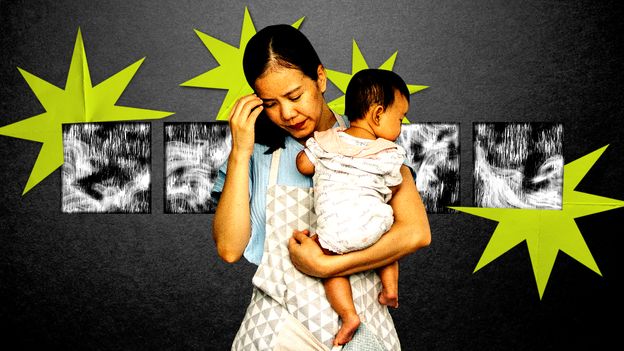
New research suggests that modern parents experience significant sleep deprivation not necessarily because they are getting less sleep than their ancestors, but due to differences in societal expectations and parenting practices. In a Reddit forum, a question about parental exhaustion drew over 400 responses, highlighting how pervasive this issue is.
Read More
Historically, many families raised children with community support, unlike today, where parents often balance work and child-rearing independently. Sleep for caregivers tends to change following the arrival of children, largely due to infants' night-time feedings or toddlers waking early. However, evidence indicates that our ancestors may not have been as sleep-deprived as commonly believed.
In a study involving nearly 40,000 participants in Germany, first-time mothers reported getting about an hour less sleep during the first three months postpartum, while fathers lost approximately 20 minutes. After six years, parents still hadn't fully regained their pre-pregnancy sleep levels. Despite these differences, parents with children under six were sleeping an average of seven hours per night, only slightly less than non-parents.
When comparing contemporary foraging societies, which provide insight into ancestral lifestyles, adults typically sleep between 6.9 to 8.5 hours in bed but actually sleep for about 5.7 to 7.1 hours due to frequent awakenings. Interestingly, parents in industrialized communities often report greater feelings of fatigue than those in foraging societies, raising questions about the reasons for this disparity.
David Samson, an evolutionary anthropologist, found that foraging adults, including many parents, generally express satisfaction with their sleep. Contrary to modern trends, frequent awakenings were commonplace in hunter-gatherer societies, where the concept of