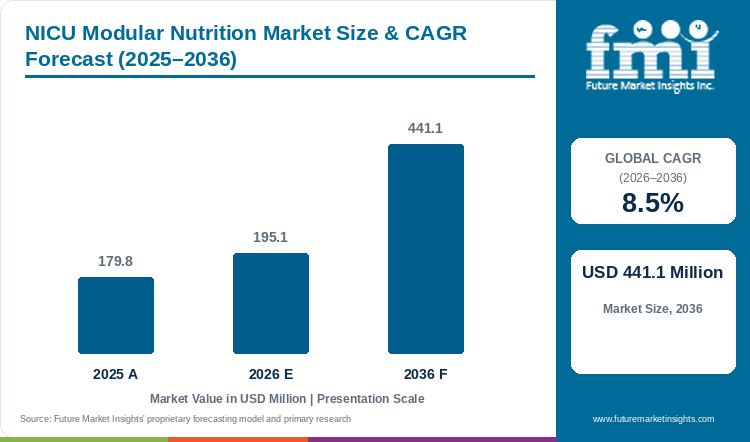
The global NICU modular nutrition market is projected to grow from USD 195.1 million in 2026 to USD 441.1 million by 2036, with a compound annual growth rate (CAGR) of 8.5% between 2026 and 2036. The market value is expected to increase from USD 179.8 million in 2025.
Read More
In 2026, protein modules will lead the market with a 38.0% share, allowing neonatal teams to boost protein intake without increasing overall nutrient doses. The American Academy of Pediatrics endorses fortified mother’s milk as optimal nutrition for very low birth weight (VLBW) infants, defined as those weighing 1,500 grams or less. In 2025, the United States had 3,606,400 births, with a preterm birth rate of 10.41% contributing to a significant cohort of infants needing specialized nutrition. South Korea's neonatal network connects over 70 hospitals, accounting for more than 80% of domestic VLBW births annually, which is expected to further drive market growth.
Key insights from the market indicate that fortified human milk will represent 50.8% of revenue in 2026, aligning with recommendations for VLBW infants. Additionally, infants born before 28 weeks gestation will account for 42.6% of demand, as their nutrient needs are heightened while their feeding volume capacity remains low. Level III-IV NICUs are projected to hold 48.7% of the market, as specialized teams oversee nutrition fortification and growth monitoring. Hospital pharmacies are anticipated to generate 46.1% of sales, necessitating controlled processes for ordering and storage.
Regionally, South Korea is highlighted as the fastest-growing market, with a CAGR of 8.8%, followed by the USA at 8.1% and the UK at 7.8%. Japan is expected to grow at a more modest rate of 6.5%.
The demand for NICU modular nutrition is driven by the high nutrient requirements of VLBW infants. However, challenges include the complexity of preparation and varying hospital practices that may limit the standardization of these products.
Notable companies in this market include Abbott, Prolacta Bioscience, Danone Nutricia, Mead Johnson/Reckitt, Nestlé S.A., and Medolac Laboratories, each contributing to the development and supply of nutritional products tailored for neonatal care.