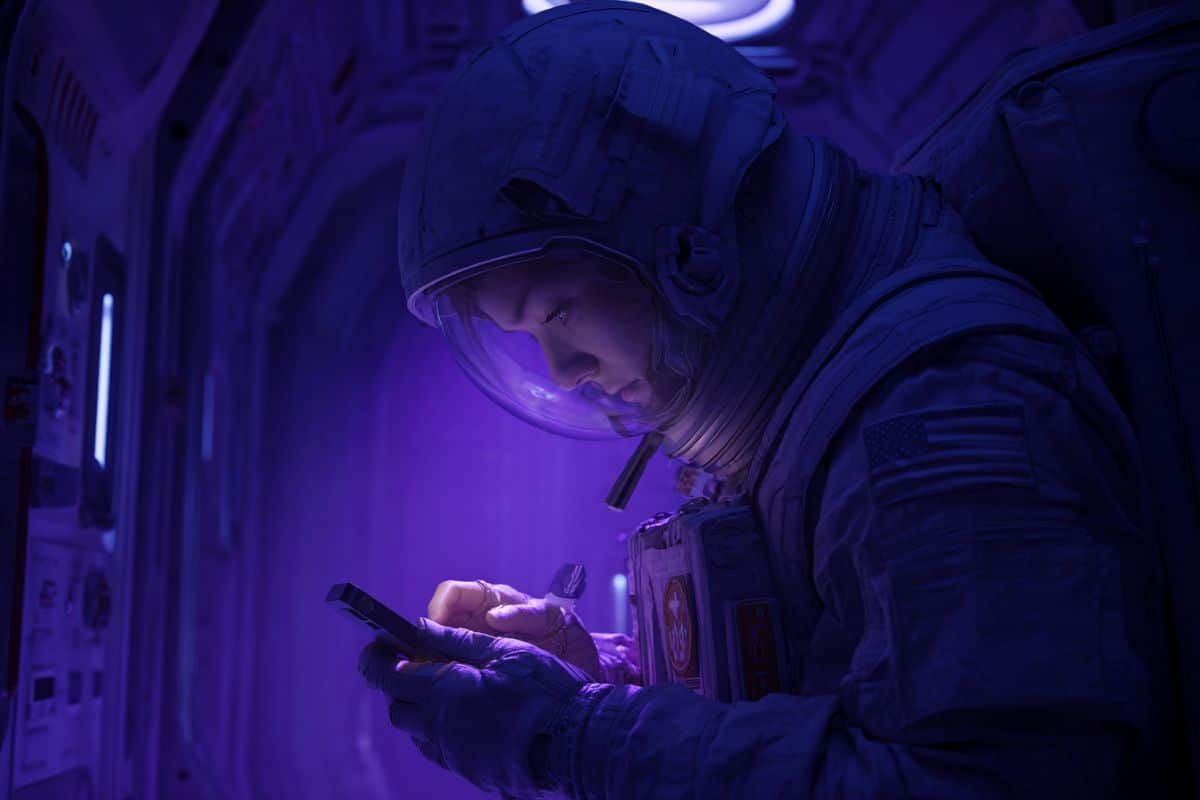
Researchers at Washington State University have created a 15-minute blood test that allows astronauts and shift workers to track their internal biological clocks. This inexpensive test uses a tiny drop of blood and a smartphone-based reader to measure melatonin levels, which are crucial for determining when a person’s biological night begins.
Read More
The test, described in a study published in Nanoscale Horizons, employs fluorescent nanoparticles to achieve high accuracy in measuring melatonin, thereby identifying the onset of the “physiological night.” Understanding this timing is vital, especially for NASA astronauts whose circadian rhythms are disrupted in space, leading to potential impairments in brain function and alertness.
Currently, melatonin assessment typically requires laboratory analysis, but this device allows for immediate on-site testing, making it useful on space missions, fire camps, and other field settings. The researchers plan to validate the test further for applications in treating sleep disorders and monitoring individuals like firefighters exposed to hazardous environments.
Annie Du, a research professor involved in the project, emphasized the importance of the sensing method connected to a smartphone, which enables real-time results. This lateral flow test approach resembles processes used in pregnancy tests and offers precise melatonin readings instead of simple positive or negative results.
Melatonin, a hormone regulated by the pineal gland, signals the start of nighttime, with its production increasing in the evening. Accurate testing of melatonin levels is essential for managing sleep disorders and optimizing work schedules for tasks requiring prolonged alertness.
Existing technologies for detecting melatonin are often costly or insufficiently sensitive, but the new method, utilizing europium nanoparticles, achieves remarkable sensitivity. Researchers have tested plasma samples from participants in WSU’s Sleep and Performance Research Center and aim to develop continuous monitoring systems akin to glucose monitoring devices used in diabetes care.
The study represents a collaboration of experts in pharmaceutical science, engineering, and sleep research, with support from the NASA-funded Biology in Space Consortium. The project highlights the potential for easy, precise monitoring of biological rhythms, particularly in high-stakes environments where timing is critical.