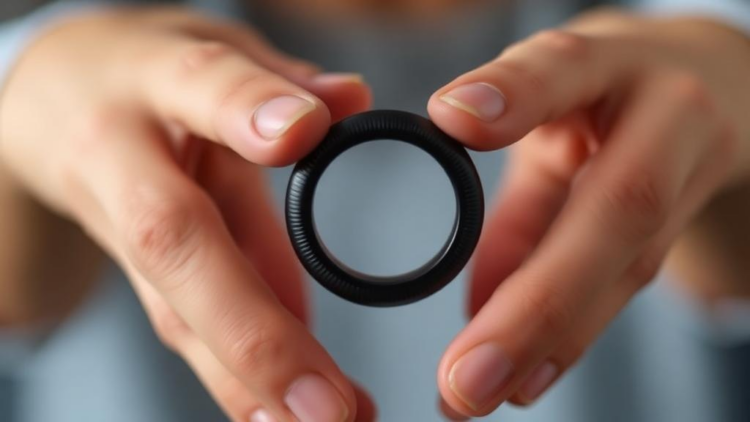
A titanium smart ring marketed as a fitness and sleep device may offer insights into the physiological indicators of depression and anxiety, according to a study published in BMC Medicine. Researchers from the University of Oulu in Finland and TU Dortmund University in Germany analyzed data from over a thousand young adults in the Northern Finland Birth Cohort 1986, which follows individuals from before birth. The study findings indicate that those with more severe mental health symptoms exhibited significant differences in sleep patterns, heart rate, heart rate variability, and daily movement compared to those without such symptoms.
Read More
Participants aged between 33 and 35 wore an Oura Ring for two weeks. The analysis included only those who wore the device for at least fifteen hours on at least one weekday and one weekend day, resulting in 1,290 participants with usable data. During this period, the ring collected comprehensive data on sleep architecture—including different sleep stages—heart rate through photoplethysmography, heart rate variability indexed by RMSSD, and daily movement intensity. Mental health symptoms were evaluated using the GAD-7 scale for anxiety and the HSCL-25 checklist for depression and anxiety. Researchers applied analysis of covariance to compare metrics across symptom severity groups, controlling for potential confounding variables.
The results revealed that individuals with moderate-to-severe anxiety and those identified with depression and anxiety symptoms spent less time in REM and deep sleep and more time in light sleep than those symptom-free. These changes in sleep stages could be linked to mood regulation and cognitive function. Furthermore, those with symptoms displayed higher nocturnal heart rates and lower RMSSD during sleep, indicating heightened sympathetic arousal. Participants with symptoms also had reduced levels of daily physical activity, aligning with the fatigue often associated with depression and anxiety.
Interestingly, the relationship was less clear for those with mild anxiety, suggesting the wearable metrics align more closely with symptom severity rather than merely the presence of symptoms. This observation supports the idea that the data collected might accurately reflect mental states and the potential for tracking changes over time. Researchers describe these metrics as digital biomarkers—objective signals that can be continuously monitored in everyday life. Unlike traditional polysomnography, which requires clinical settings and can distort typical sleep patterns, the Oura Ring allows weeks of data collection in natural home environments.
The implications for clinical practice are significant, given the common underdiagnosis of depression and anxiety. If wearable data can supplement existing assessment methods, they may help clinicians identify early warning signs of mental health issues and customize interventions more effectively. However, the authors caution that the study's cross-sectional design limits the ability to determine causation, and the cohort's characteristics may affect generalizability. Overall, this research may represent a pivotal development in leveraging consumer technology for mental health research, potentially transforming ordinary devices into tools for monitoring mental well-being.