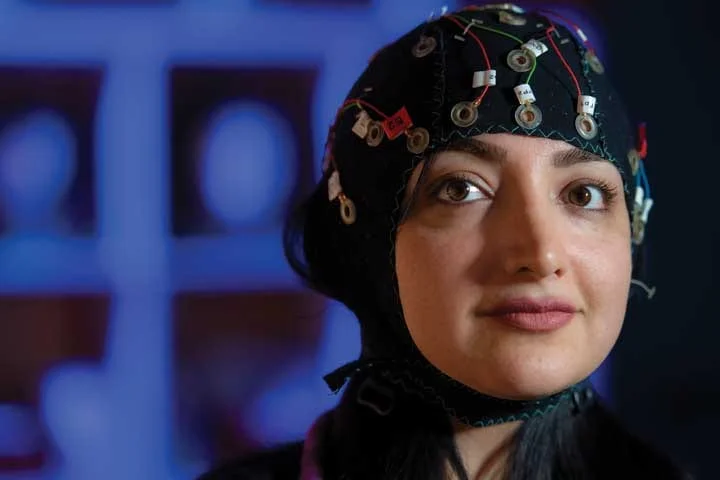
Despite sleep being a fundamental aspect of human life, researchers like UC Irvine's Sara Mednick emphasize that it remains poorly understood. Mednick, a cognitive sciences professor and director of UCI's Sleep and Cognition Lab, notes that sleep still functions as a “black box.” While we spend about a third of our lives sleeping, basic research in this area has historically received little attention. It was not until the late 1980s that sleep research gained recognition, with the American Medical Association classifying sleep medicine as a specialty in 1995. By 2005, researchers had identified various sleep disorders, establishing their widespread prevalence. The COVID-19 pandemic exacerbated sleep-related issues, with up to 40% of people reporting difficulties.
Read More
At UCI, a multidisciplinary team is investigating the connections between sleep, mental health, and physical well-being. The body's natural circadian rhythms play a crucial role in regulating sleep and wakefulness. Disruption of these rhythms can have dire consequences, including mortality from prolonged sleep deprivation. Current statistics from the National Institutes of Health reveal that over 20% of American adults experience sleep problems, with 50 to 70 million suffering from sleep disorders. The American Academy of Pediatrics estimates that 14% of children and adolescents also face sleep issues.
Poor sleep can trigger increased activity in the stress response system, leading to elevated levels of stress hormones and associated health problems like hypertension, cardiovascular disease, and cognitive impairments. Mednick's lab is actively studying how sleep affects memory and cognition, with particular attention to factors such as aging, the menstrual cycle, opioid addiction, poverty, and homelessness. Mednick emphasizes the importance of sleep for emotional stability, memory, and physical performance.
Research on the menstrual cycle's impact on sleep and cognitive performance has yielded unexpected results. Former assistant researcher Katharine Simon highlights that early data indicate minimal effects of hormonal phases on cognition and sleep. The lab is also investigating how sleep is essential for episodic memory, which relates to personal experiences and details about significant events.
Simon has now moved to a position at UCI's School of Medicine, where she focuses on sleep within pediatric populations, investigating mood, sleep patterns, and memory in depressed children and teenagers with sleep apnea.
Other researchers at UCI have explored how circadian rhythm disorders link to various mental health issues. Amal Alachkar and colleagues found connections between sleep disruptions and prevalent mental disorders, suggesting that understanding the molecular basis of these conditions could lead to better treatments.
In another avenue of exploration, Karen Lincoln examines health disparities, particularly among Black Americans who on average report the poorest sleep quality. Her work focuses on the social and environmental stressors impacting sleep, including work patterns and neighborhood conditions.
On the Asian American front, researchers like Sunmin Lee and Brittany Morey investigate the unique stressors affecting sleep in this demographic, countering stereotypes that suggest high functioning in these communities. Their research examines the roles of acculturation stress and discrimination on sleep quality.
Looking ahead, researchers acknowledge that the impact of climate change on sleep is an emerging field deserving further study. Mednick warns that global warming may impair vital biological functions like sleep, advocating for more research on its health implications.
Researchers stress the critical role sleep plays in overall health, prompting a call for deeper understanding and appreciation of this essential need.