A recent study published in Frontiers in Psychiatry on February 16, 2026, investigates the relationships between sleep quality, cognitive function, and depressive symptoms among older adults in the Matang community of Wuhu, China. With the aging population increasing, understanding these associations is crucial as depressive symptoms and sleep disturbances are known to impact cognitive impairment.
Read More
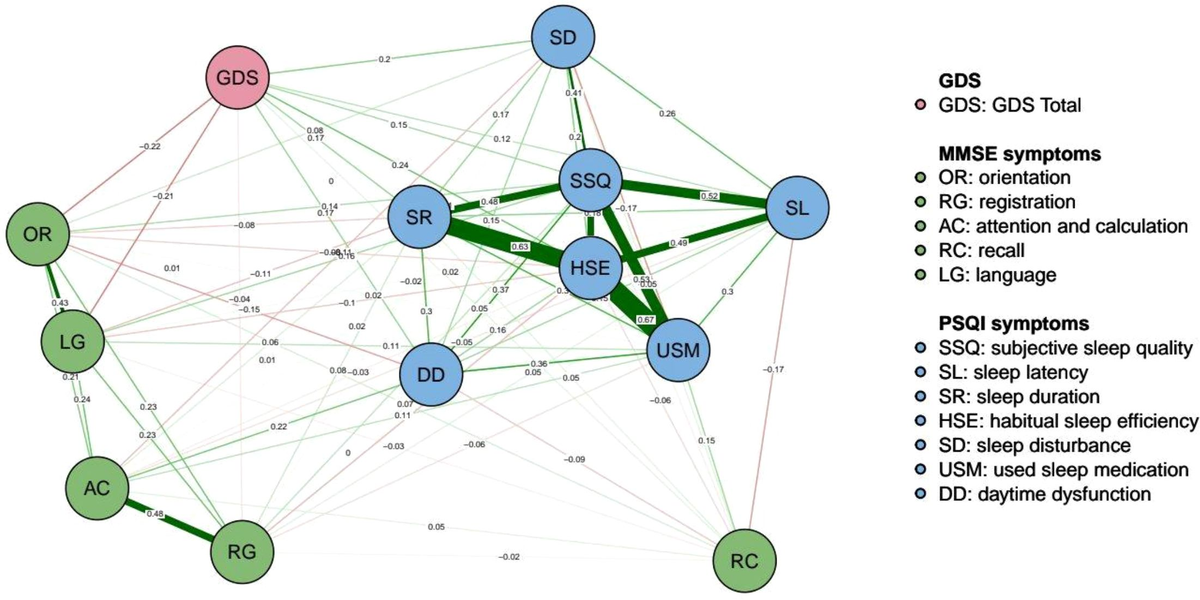
The cross-sectional study involved 457 participants aged 60 and older, with 126 completing the necessary assessments, including the Mini-Mental State Examination (MMSE), the Pittsburgh Sleep Quality Index (PSQI), and the Geriatric Depression Scale (GDS). The analysis revealed that subjective sleep quality (SSQ) acted as the core symptom connecting MMSE, PSQI, and GDS networks.
Key findings include that the strongest associations were found between habitual sleep efficiency (HSE) and the use of sleep medications (USM), with a significant weight of 0.67. The nodes attention and calculation (AC) along with registration (RG) demonstrated a strong connection with an edge weight of 0.48, indicating their relevance in cognitive functioning.
The study emphasizes the importance of subjective sleep quality and the role of depressive symptoms in understanding the interconnectedness of cognition, sleep, and mood among older individuals. Possible interventions could focus on improving sleep quality and addressing depressive symptoms to enhance cognitive health.
The increasing prevalence of cognitive impairment among older adults, with rates as high as 20.8% for mild cognitive impairment in those aged 65 and older, highlights the need for effective strategies to maintain mental health within this demographic. Given the bidirectional relationship between sleep quality and depression, enhancing community support and participation may also contribute positively to mental health outcomes.
Despite the valuable insights, the study has limitations, including its cross-sectional design, which restricts causal inferences, and the reduced sample size that may impact stability and accuracy. Future research with larger samples is encouraged to explore symptom interrelations in depth.
This investigation aligns with efforts to understand the health challenges faced by an aging population and propose targeted interventions.