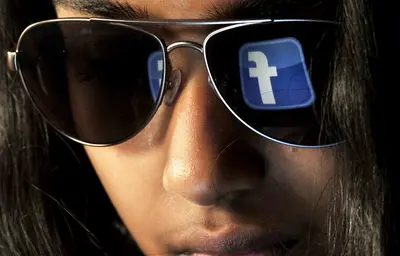
October observes World Mental Health Awareness Month and World Mental Health Day on October 10, highlighting the ongoing challenges posed by social media comparisons on individual self-worth. While the technology enabling vast connections has evolved, the human tendency to compare ourselves with others remains unchanged. This phenomenon, often referred to as “keeping up with the Joneses,” has expanded significantly with the rise of social networking sites (SNS).
Read More
Today, SNS platforms provide continuous visibility into the curated highlights of others' lives—such as achievements, vacations, and relationships—while users typically share only polished versions of their experiences. This selective sharing can lead individuals to compare their private realities against the highlight reels of others.
However, the context of shared information is often lacking. Users might see celebratory posts without understanding the struggles behind them, such as the financial pressures surrounding a holiday or the difficulties in a relationship. This leads to assumptions that can distort self-perception: thoughts like "Everyone else seems successful, so I must be falling behind" or "She looks happy and confident, so her life must be better than mine" are common.
Research differentiates between upward and downward social comparison. Upward comparisons involve evaluating oneself against those perceived as more successful, which can sometimes offer inspiration but often results in feelings of inadequacy. Conversely, downward comparisons, where one compares themselves to those perceived as less fortunate, can enhance self-esteem. A recent analysis of 226 studies with over 91,000 participants found that upward comparisons were linked to poorer mental health and body dissatisfaction, while downward comparisons had no significant negative associations.
The influence of social media on self-worth and mental health is complex. Notifications, likes, and comments generate unpredictable reinforcement that can lead to compulsive checking behavior. This does not equate to addiction but suggests that the functionality and management of social media use are crucial factors. Warning signs of problematic social media use include efforts to cut down being unsuccessful and neglecting important aspects of life due to online activity.
Time spent on social media accounts for a limited effect on mental health; rather, how individuals engage with social media is of greater significance. The meaning derived from interactions, such as the number of likes or followers, reveals little about the whole reality of a person's life.
As Mental Health Awareness Month progresses, it is vital to reflect on personal comparisons and their impacts on self-worth. For individuals struggling with these feelings, seeking support from trusted persons or resources, such as the Mental Health Information Centre of Southern Africa or the South African Depression and Anxiety Group, can be beneficial. Professor Christine Lochner from the Mental Health Information Centre of Southern Africa at Stellenbosch University emphasizes the importance of understanding these dynamics.