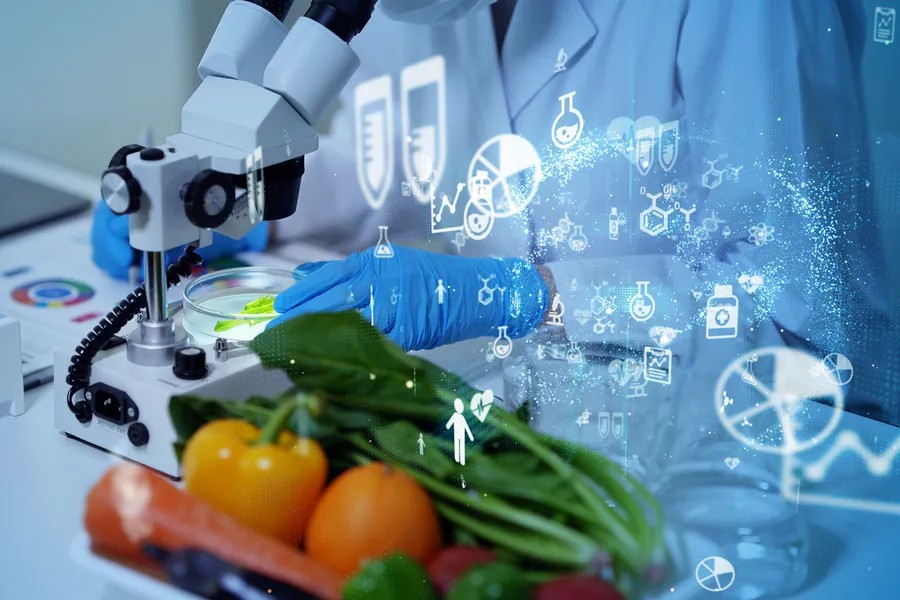
A recent review discusses how multi-omics and artificial intelligence (AI) are transforming nutritional epidemiology. The research presents next-generation approaches for developing precise and sustainable diets aimed at improving health outcomes for individuals and the planet. Key challenges and advancements in dietary assessment methods, observational study designs, and multi-omics technologies are highlighted.
Read More
The study emphasizes the future direction of multidimensional precision nutrition, which aligns with stage-specific management practices and sustainable nutrition models, including the EAT-Lancet Planetary Health Diet. An interview with Professor An Pan, dean of the School of Public Health at Tongji Medical College in China, outlines the requirements for scaling precision nutrition, the role of AI in creating accurate reporting tools, and the importance of culture-sensitive, sustainable diets in China. Pan stated, "Our mission is to leverage technological innovation to address the complex diet-health-environment nexus."
The publication in The Innovation Nutrition stresses the significance of causal inference in determining the dietary impacts on health. While new methods, including objective biomarkers and improved dietary monitoring tools, enhance causal inference, traditional methods depend heavily on self-reported dietary data, which can often be inaccurate due to recall and social desirability biases.
Pan notes that traditional self-reporting tools—like food diaries, 24-hour recalls, and Food Frequency Questionnaires—are widely used but rely on memory and honest reporting, making them susceptible to systematic errors. In contrast, biomarkers from blood and urine provide objective measures of dietary intake. Examples include urinary nitrogen for protein intake and plasma carotenoids for fruit and vegetable consumption. However, Pan adds that these biomarkers have limitations due to short half-lives and high assay costs.
Emerging technologies such as image-recognition systems and large language model-based tools can analyze food types and portion sizes from photographs. Wearable biosensors, like continuous glucose monitors, are also being utilized for real-time metabolic tracking. Pan highlights that AI's integration has advanced the analysis of complex biomarker data linked to specific dietary patterns.
The review identifies precision nutrition as a crucial aspect of the future of nutritional epidemiology, integrating genetic, metabolic, and microbiotic data with sensor information. Trials like Food4Me and microbiome-targeted interventions show that personalized dietary advice can lead to better health outcomes than generic recommendations. However, most current evidence comes from smaller trials with shorter durations, lacking hard endpoints like cardiovascular events.
Pan identifies three essential steps for scaling precision nutrition: conducting large, long-term trials with definitive outcomes, standardizing and reducing costs for multi-omics profiling, and ensuring equitable implementation to avoid widening health disparities. She estimates that a decade may be needed for broadly validated precision nutrition plans.
In related developments, the Innovation Institute for Food & Health at the University of California Davis recently partnered with AG1 to enhance nutritional product development using advanced omics analytics tailored to specific population needs.
Digital twin technology is also gaining traction, allowing virtual simulations of individual responses to diets over a lifetime. Pan notes its potential to model lifelong nutritional impacts, especially in early life, showing that dietary changes can significantly influence adult health outcomes.
Sustainable diets are crucial in the context of climate change, as food production contributes to 30% of global greenhouse gas emissions. Pan emphasizes that any framework for sustainable diets, especially in China, must address both obesity and undernutrition. While the EAT-Lancet guidelines offer a global template, they require adaptation to local environmental and cultural contexts to be effective. This includes adjusting staple foods and cooking practices to meet local agricultural and nutritional needs while ensuring affordability and cultural acceptability.