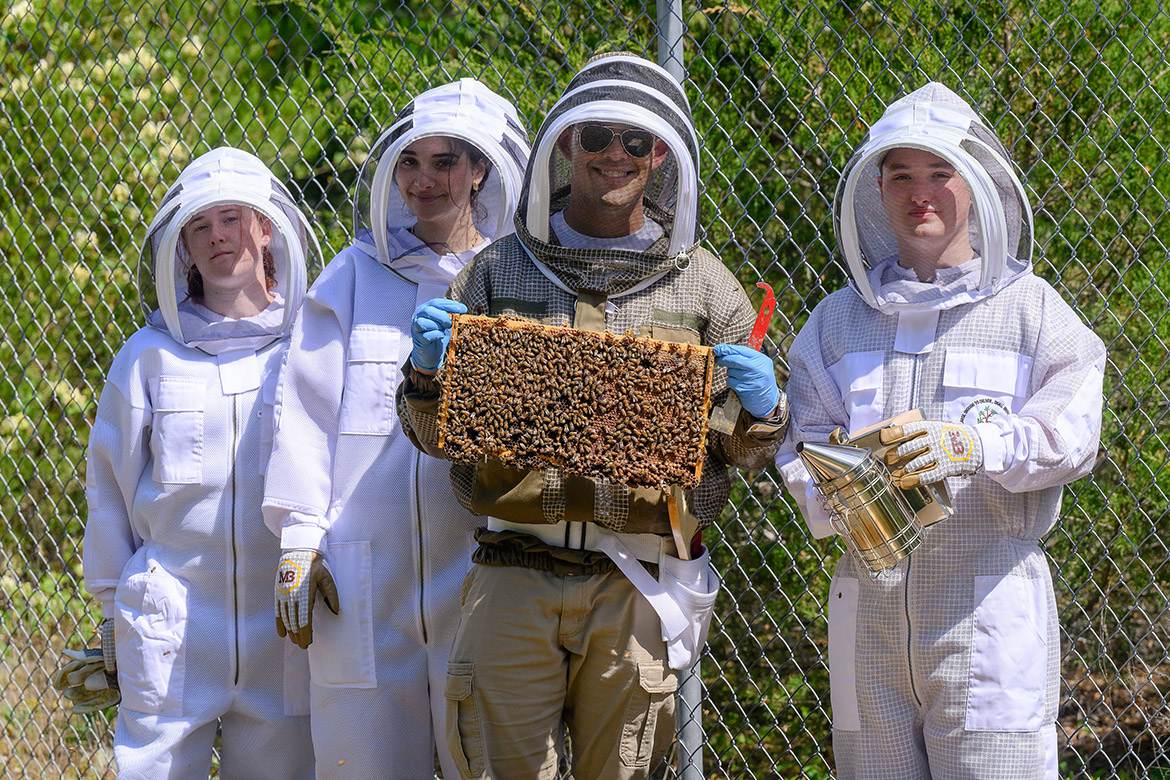
MURFREESBORO, Tenn. — Manuel Giannoni-Guzmán, an assistant professor of biology at Middle Tennessee State University (MTSU), has been awarded a $200,000 grant from the USDA National Institute of Food and Agriculture to investigate the circadian rhythms of honeybees. This research aims to enhance understanding of the bees' internal biological clocks, which could protect pollinators crucial to global food production.
Read More
Giannoni-Guzmán is leading a team of researchers at MTSU’s Small Farm facility, where they study how honeybee brains process and track time. The lab focuses on time-dependent behaviors such as foraging, mating flights, and temperature regulation within the colonies, which he notes is controlled by their internal clocks.
The research involves developing viruses to deliver fluorescent markers that reveal how neurons in the bees’ brains respond to environmental cues. Giannoni-Guzmán highlighted that, while it has been known for over a century that bees associate time with food sources, the underlying mechanisms for this memory have only recently become clear.
The project also aims to assess how environmental factors, such as climate change and pesticides, impact these biological rhythms. Doctoral student Jocelyn Bransford pointed out that understanding the effects of pesticides on bee behavior is essential, even if the chemicals do not directly kill the bees.
Giannoni-Guzmán described honeybees as environmental biomarkers, indicating the health of their surroundings. The research could provide early warning signs for beekeepers about failing colonies due to factors like foraging declines, which correlate with bees' circadian rhythms.
The team currently manages 10 honeybee colonies and intends to establish an apiary adjacent to the MTSU Science Building for educational purposes. Graduate students like Jack Huckabay are gaining hands-on experience by monitoring colony health and conducting behavioral observations.
Furthermore, Giannoni-Guzmán noted that honeybees share genetic similarities with humans regarding circadian biology. This research could yield insights into how similar mechanisms affect health across species, including humans.
The findings from this research may not only benefit agriculture but also deepen the understanding of circadian influences on health risks linked to societal behaviors, offering parallels between human and bee biological clocks.