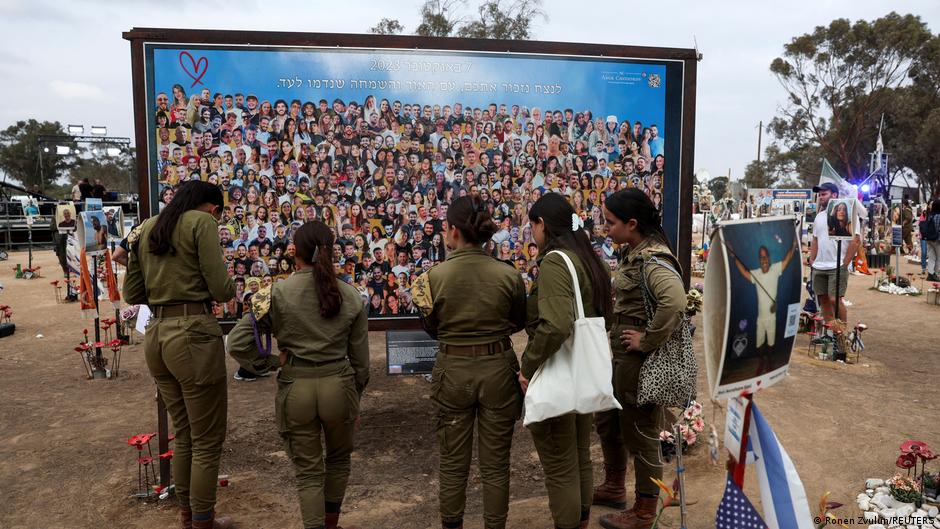
As the third anniversary of the October 7 attacks approaches, residents in Israel are still reeling from the impact on their mental health. Ronen Shalev, whose family was directly affected, describes a physical sense of anticipation. "You start shivering," he said. "It's not just one day and you move on. We have many graves to visit, many families to meet. It’s a difficult time and you feel it in your body."
Read More
Shalev's children were present at the Nova Party in southern Israel, where nearly 400 people were killed in an attack by Hamas and its affiliates. The overall toll from the attacks reached around 1,200 dead, with an additional 250 hostages taken. The violence sparked a subsequent war in Gaza, claiming tens of thousands of Palestinian lives and displacing many more.
His son, Roee, survived being shot, but witnessed the death of his partner, Mapal Adam. Tragically, Shalev's wife, Gavriela, later succumbed to grief and was found deceased in her car. Roee struggled with post-traumatic symptoms, which emerged as severe mood swings. He initially sought treatment to appease his father, but ultimately succumbed to despair, expressing his anguish in a final message on Instagram.
"I’m alive, but I’m dead within," Roee wrote.
Since the October 7 attacks, Israel has been grappling with a mental health crisis of significant proportions. A report from Israel’s State Comptroller, published in February 2025, indicated that approximately 39% of Israelis report medium or severe levels of post-traumatic symptoms, depression, or anxiety—amounting to about 3 million individuals, with an estimated 600,000 facing severe issues. Despite this, the increase in those receiving mental health treatment since the attacks has only been about 1%, or roughly 60,000 people.
This crisis particularly affects survivors of the attacks as well as residents evacuated from conflict zones. According to Noga Dagan-Buzaglo from the Adva Center, while the mental health funding has increased, it falls short of what is necessary. She emphasized the difficulty in attracting health professionals to the public mental health sector due to lower wages and high workloads.
Mental health professionals themselves are also struggling; research from the University of Haifa indicated that a staggering 84% of therapists treating those impacted by the attacks exhibited traumatic symptoms. Reports suggest that waiting times for treatment can exceed six months, with some patients waiting over a year.
In the face of this crisis, mental health NGOs and volunteers are stepping in to provide support, yet they are often overwhelmed. The Ministry of Health reported a rise in prescriptions for sedatives, sleep aids, and antidepressants between 13% and 17%.
Combat soldiers have seen significant mental health challenges as well, with recent statistics showing a sharp rise in suicide cases among reservists—from an average of one per year in the prior six years to 11 cases in 2024 and nine suspected cases in 2025. Dagan-Buzaglo pointed out that while the military offers better working conditions and pay for mental health professionals, the system still suffers from staff shortages.
Ronen Shalev actively speaks about mental health, sharing his family's story to promote awareness and encourage others to seek help. He argues that breaking the taboo surrounding suicidality in Israeli society is crucial, especially for those who consider themselves strong, as they may be the least likely to seek treatment.
Shalev, diagnosed with PTSD, asserts, "Life, with all its pain, is still worth deciding in favor of." His advocacy for mental health treatment has become integral to his own recovery journey.