A recent study from icddr,b highlights concerning levels of digital screen time among school children in Dhaka, with implications for sleep deprivation, obesity, headaches, eye problems, and mental health. The research revealed that over 83 percent of children, or more than four out of five, spend over two hours daily on screens, which surpasses international recommendations for recreational screen use. On average, these children engaged with digital devices for approximately 4.6 hours each day.
Read More
Conducted between 2022 and 2024, the study involved 420 children aged 6 to 14 from six schools in Dhaka. This included three Bangla-medium and three English-medium institutions. The findings were published in the JMIR Human Factors journal.
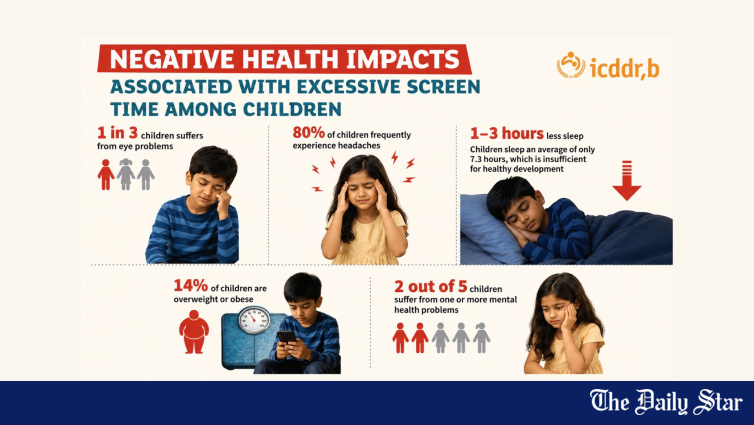
Researchers evaluated screen usage patterns, sleep quality, physical symptoms, body weight, behavior, and mental well-being through face-to-face interviews and physical assessments. The study found that more than one-third of participants experienced eye problems, and 80 percent reported frequent headaches. Children who used screens for more than two hours daily averaged only 7.3 hours of sleep each night, falling short of the recommended 8 to 10 hours necessary for growth and brain development.
About 14 percent of the children were categorized as overweight or obese, correlating with excessive screen exposure. Health experts warned that long-term sleep deprivation could negatively impact memory, concentration, learning ability, emotional regulation, physical growth, and overall mental health. Additionally, around 40 percent of children reported experiencing one or more mental health challenges, such as anxiety and behavioral difficulties.
Researchers suggested that excessive screen exposure could impact children through various pathways. Late-night screen use may disrupt sleep by overstimulating the brain, while prolonged sitting with devices can decrease physical activity and outdoor play, heightening the risk of obesity. Extended screen time also contributes to eye strain and headaches, alongside diminished concentration.
Shahria Hafiz Kakon, lead researcher at icddr,b, advised parents to be vigilant for signs of sleep issues, headaches, irritability, or concentration difficulties, as these symptoms might indicate that screen time is adversely affecting children's health. To alleviate eye strain, the study recommended the “20-20-20” rule: after 20 minutes of screen use, children should look at something 20 feet away for at least 20 seconds.
Tahmeed Ahmed, executive director of icddr,b, acknowledged that digital devices are integral to modern life and education but emphasized the necessity for healthy boundaries. He reiterated the World Health Organization's guidance to limit recreational screen time to about two hours daily for school-aged children. Parents are encouraged to promote outdoor play, physical activity, and family time without devices, along with extracurricular activities like debates and group reading.
The researchers concluded by advocating for balanced digital habits rather than a complete ban on technology, suggesting the creation of guidelines and awareness programs for students, teachers, and guardians on responsible technology use.