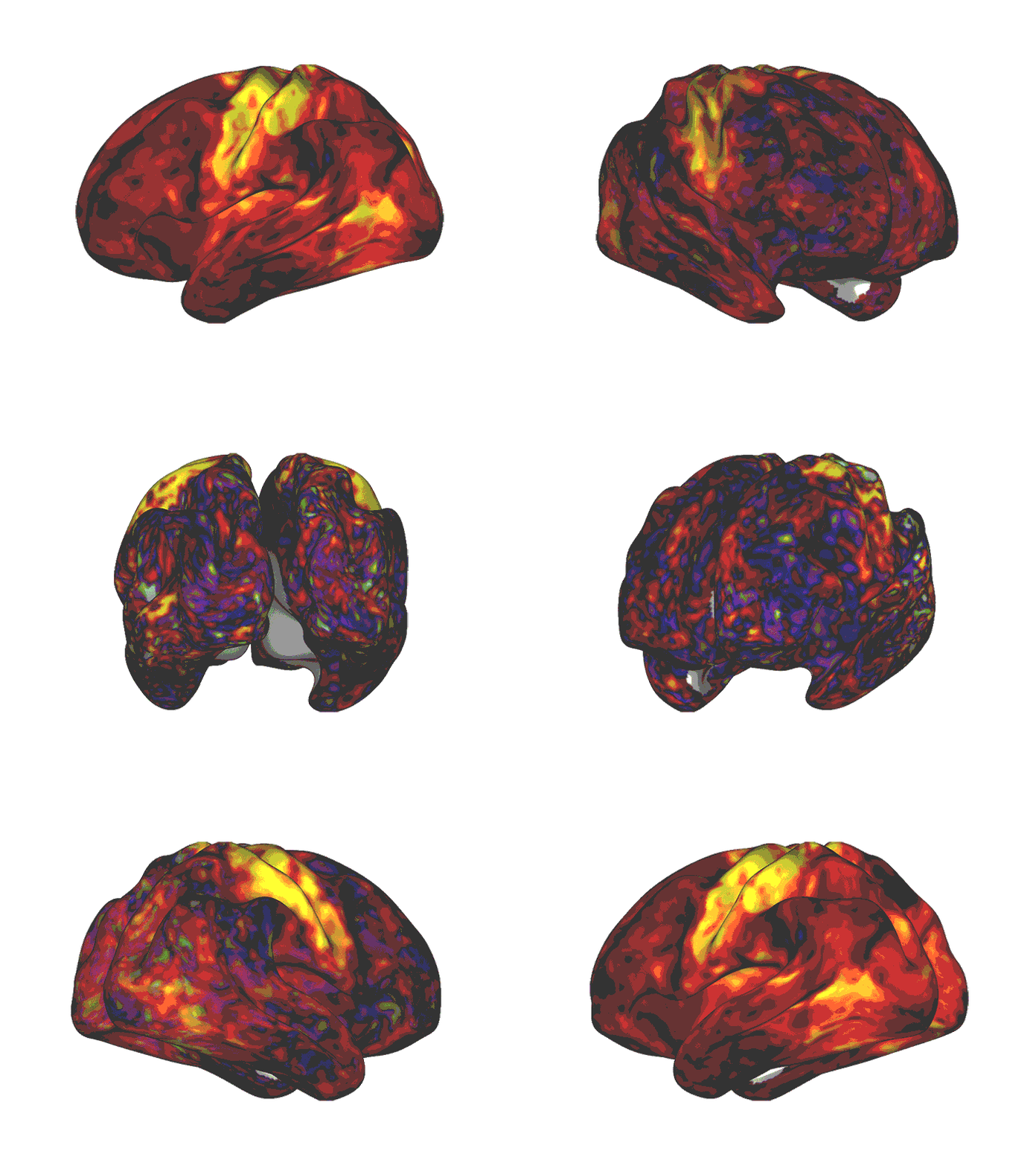
A study at Washington University School of Medicine reveals that stimulant medications commonly prescribed for attention deficit hyperactivity disorder (ADHD), such as Ritalin and Adderall, primarily affect the brain's reward and wakefulness centers, rather than the attention circuitry as previously thought. The research indicates that around 3.5 million U.S. children aged 3 to 17 are currently on ADHD medications, a figure that has grown alongside increasing diagnoses of the disorder.
Read More
Led by neurology experts Benjamin Kay, MD, PhD, and Nico U. Dosenbach, MD, PhD, the study published in the journal Cell challenges the conventional belief that these drugs enhance attention directly. It suggests instead that the medications improve performance by increasing alertness and interest in tasks. This effect includes patterns of brain activity similar to those seen after good sleep, which mitigates the impact of sleep deprivation.
Kay, who practices at St. Louis Children’s Hospital, noted the shift in understanding: "The improvement we observe in attention is a secondary effect of a child being more alert and finding a task more rewarding," highlighting the need to address sleep quality alongside medication treatment for ADHD.
To assess the effects of medication on brain activity, the researchers analyzed functional MRI (fMRI) data from 5,795 children aged 8 to 11 involved in the Adolescent Brain Cognitive Development (ABCD) Study. This long-term study tracks the neurodevelopment of over 11,000 children across the U.S. The analysis revealed that children taking stimulant medications exhibited heightened activity in brain areas associated with arousal and perceived reward, but not in regions linked to attention.
Further validating their findings, the researchers conducted an experiment on five healthy adults who normally do not take stimulants. fMRI scans before and after administering a dose indicated similar activation of arousal and reward centers.
Dosenbach explained that these medications effectively enhance motivation for challenging or tedious tasks, allowing children with ADHD to engage more fully. He added that this mechanism also offers insight into how stimulants manage hyperactivity: children who typically fidget may find previously unrewarding tasks more engaging when on medication.
In terms of academic performance, children with ADHD on stimulants tended to achieve better grades and outperformed peers on cognitive tests compared to those not on medication. However, the benefits of stimulants were not observed universally; they appeared to enhance cognitive function mainly in children with ADHD or those suffering from insufficient sleep, pointing to the importance of adequate rest.
Kay cautions that while stimulants might mask the effects of sleep deprivation, the long-term consequences of such medication use deserve further research. He emphasized the need for clinicians to consider sleep deprivation as a potential factor in ADHD diagnoses and treat it accordingly, as chronic lack of sleep can mimic ADHD symptoms and complicate diagnoses.