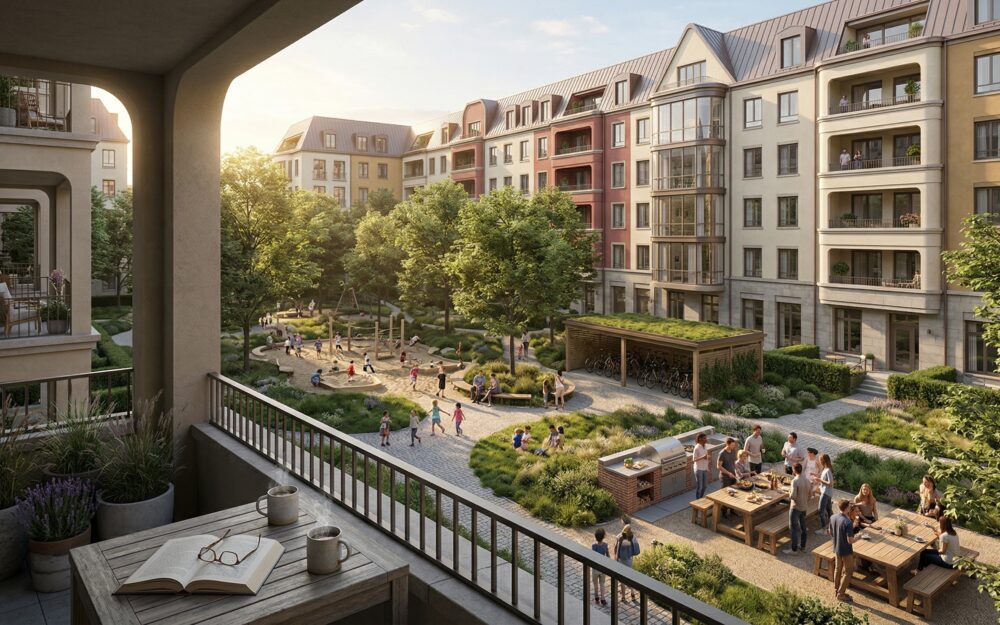
In May 2023, then-Surgeon General Vivek Murthy declared a loneliness epidemic in America, presenting a six-pillar action plan to improve emotional and mental health through enhanced social connections. The first pillar focuses on strengthening social infrastructure within local communities, emphasizing the importance of designing environments that encourage social interaction.
Read More
Murthy's report suggests that creating conditions for natural social connections is more effective than merely modifying individual behaviors. Various housing designs have proven effective in promoting community interaction; however, many of these types have been constrained by outdated regulations for the past 80 years. Fortunately, change is underway, with an increasing number of developers and urban planners advocating for zoning reforms that accommodate these community-oriented housing designs.
Among these designs is the courtyard block, a historically successful urban form found in many European cities like Barcelona, Vienna, and Copenhagen. A courtyard block consists of multiple buildings arranged in a continuous perimeter around a shared interior green space, providing both strong public engagement and private retreat.
The structure’s design creates an inviting public realm along the street while offering privacy and a communal area within the courtyard. This combination allows residents to experience dynamic street life and peaceful private surroundings at the same time. The ratio of building width to depth also improves living conditions by allowing for dual-aspect apartments that benefit from natural light and ventilation.
Despite the courtyard block’s advantages, their absence in American urban planning stems from restrictive zoning laws established in the early 20th century that favor isolated buildings over cohesive blocks. This shift resulted from concerns over fire safety, traffic, and a misunderstanding of density's role in urban living.
However, changes are on the horizon as cities begin to rethink parking requirements and building codes, opening the possibility for new courtyard blocks designed for contemporary needs. Research supports that well-designed communal spaces foster social connections, which are essential for combating loneliness. Courtyard designs encourage spontaneous interactions among residents, facilitating stronger community ties.
To promote the development of courtyard housing, awareness and advocacy are crucial. Recognizing the environments that foster connection and advocating for policy reforms at local levels can significantly alter housing landscapes. Architects and city planners also play a vital role in creating codes that support this urban form, ensuring that such connected living spaces can be built at scale.
By embracing courtyard blocks, communities can not only address the housing shortage but also enhance social belonging and wellbeing, effectively reshaping the urban experience.