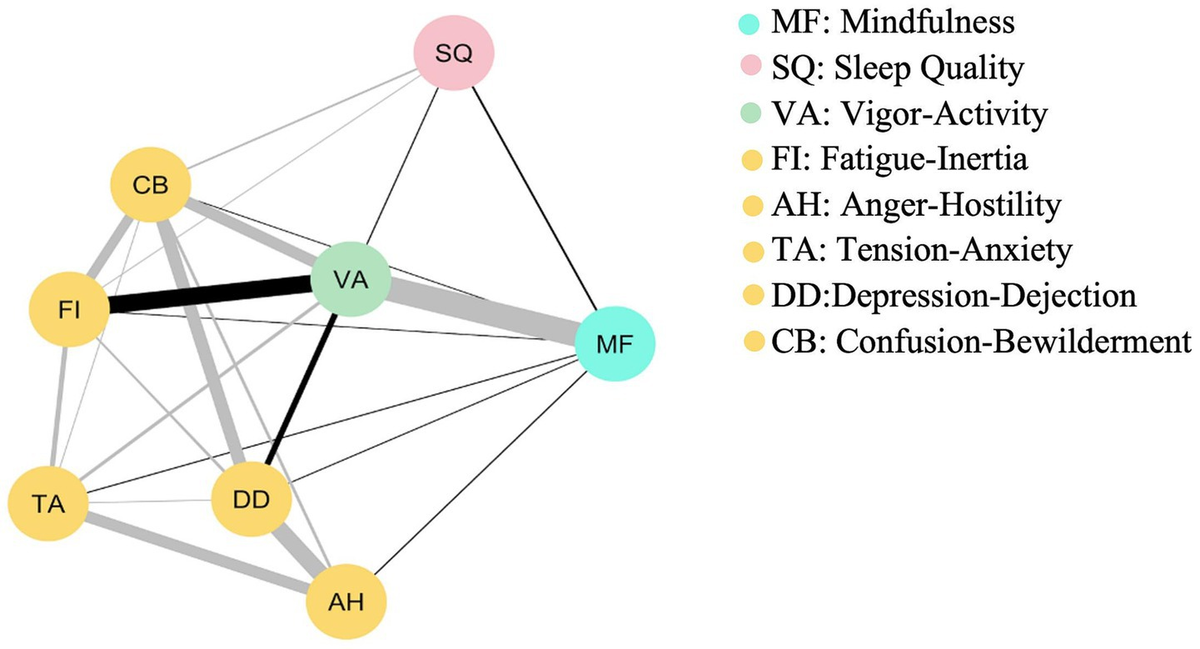
This study explores the complex relationships between sleep quality, trait mindfulness, vigor, and various negative emotions using EBICglasso network analysis. Conducted among 1,529 college students in China, the research highlights how these psychological factors interact and influence one another, particularly focusing on the impact of depression as a central node in the network.
Read More
Participants completed assessments including the Pittsburgh Sleep Quality Index (PSQI), the Mindful Attention Awareness Scale (MAAS), and the Profile of Mood States (POMS). The analysis revealed that Vigor-Activity had a positive correlation with Trait Mindfulness (r = 0.23) but a negative correlation with Sleep Quality (r = -0.10). Additionally, Depression-Dejection exhibited the strongest relationship with Anger-Hostility (r = 0.53) and was positively associated with Tension-Anxiety (r = 0.36). Centrality analysis indicated that Depression-Dejection had the highest strength centrality, positioning it as a key factor affecting sleep quality, while Vigor-Activity had the highest betweenness and closeness centrality.
It was noted that nearly 25.7% of college students in China experience sleep disturbances, which significantly affect their health and academic performance. The findings suggest that negative emotions, particularly depression, play a crucial role in sleep quality and that vigor may serve as an important link between mindfulness and sleep quality. The study emphasizes the need for interventions targeting depressive symptoms to enhance sleep quality among college students.
This research utilizes a modern network analysis approach, which differs from traditional linear methods by capturing the multifaceted interactions among multiple variables instead of isolating single effects. The use of the EBICglasso model allowed for a better understanding of conditional dependencies and subsequent structural relationships within the psychological network.
Limitations of the study include its cross-sectional design, which restricts causative inferences, and the reliance on self-reported measures. Future research is encouraged to explore these dynamics further, employing longitudinal studies and diverse populations to increase generalizability.