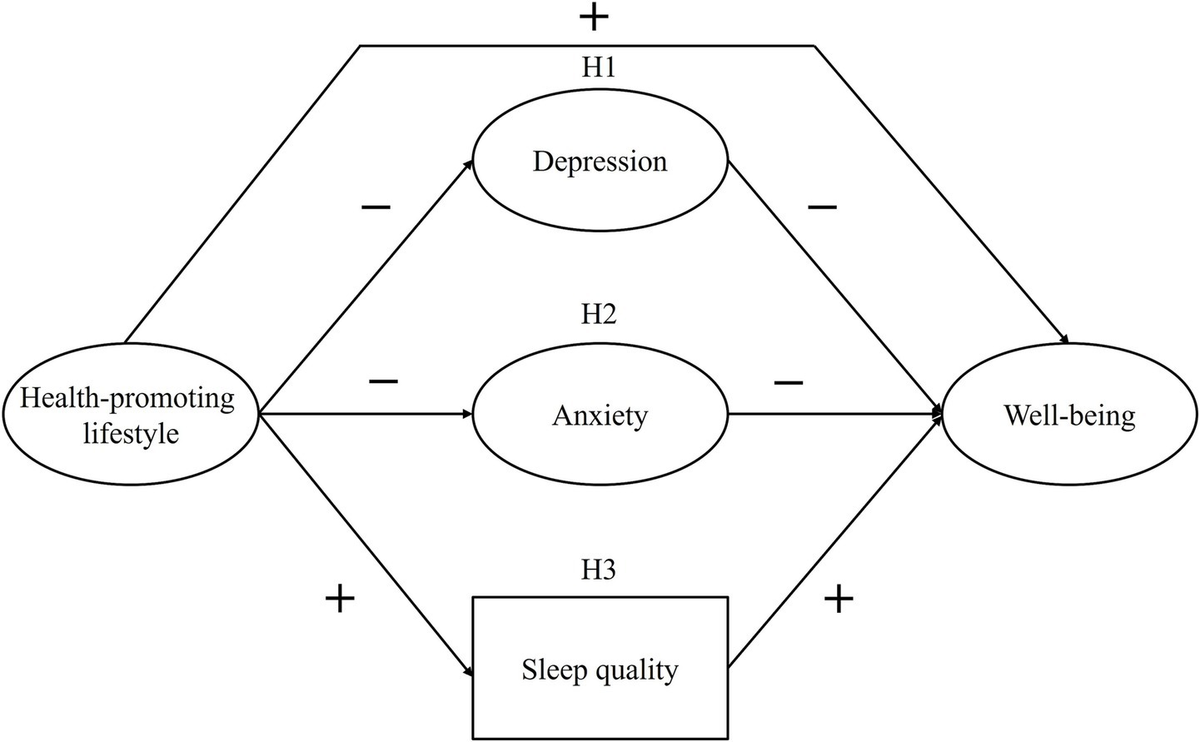
A recent study examined the relationship between health-promoting lifestyles and subjective well-being among 6,704 university students in Honduras, revealing significant connections mediated by mental health indicators such as depression, anxiety, and sleep quality. Researchers employed a structural equation model to understand these dynamics, finding that a health-promoting lifestyle directly and indirectly predicts higher levels of well-being.
Read More
The study utilized several validated instruments, including the Health-Promoting Lifestyle Profile II and the World Health Organization Well-Being Index, to assess behaviors and mental health symptoms. Results indicated that the final model accounted for 61.6% of the variance in subjective well-being. Among the mediators, depression and sleep quality showed significant effects, while anxiety did not have a statistically significant mediating role. This suggests that promoting healthy behaviors could serve as a protective factor against depression and could improve sleep quality, ultimately enhancing students’ overall well-being.
The research highlights the importance of considering health-promoting behaviors and mental health in university settings. As academic and social demands increase, maintaining a health-centered lifestyle may be crucial for student well-being in Latin America, emphasizing the need for institutional support and intervention strategies that focus on these areas. The findings contribute to existing literature on well-being in higher education, particularly in lower-middle-income countries, enriching understandings of the factors influencing student health and well-being.