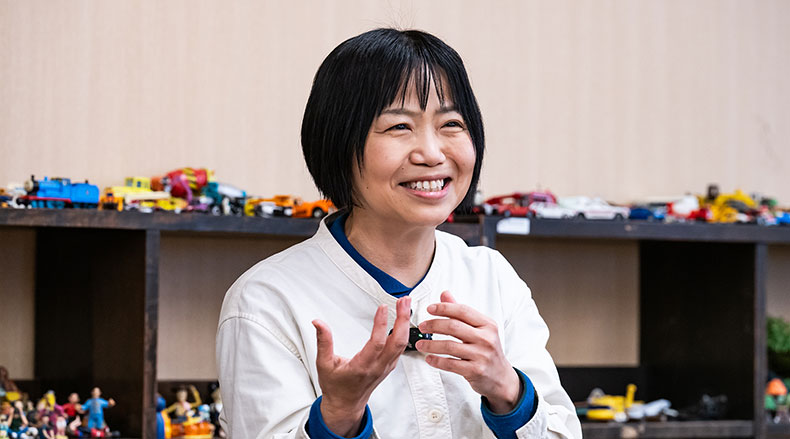
Reika Nomura, an Associate Professor at Kyushu University's Faculty of Human-Environment Studies, is at the forefront of implementing Dohsa-hou, a unique Japanese psychotherapy focusing on the mind-body connection. Nomura, who works as a clinical psychologist in various settings including hospitals and disaster-affected areas, draws upon her personal experiences of hospitalization and caring for a sick family member to enhance her approach in clinical practice, research, and education.
Read More
The Center for Clinical Psychology and Human Development at Kyushu University serves a diverse range of clients daily, including children facing school reluctance and individuals with developmental disorders such as ASD and ADHD. In this setting, therapeutic interactions often include play and physical movements, which can help clients express emotions that are difficult to articulate verbally. This integrated approach allows clinical practice and research to inform and reinforce each other, as practitioners explore how to best support their clients.
Nomura's journey into psychology began unexpectedly during her recovery from a basketball injury that required hospitalization. This experience exposed her to the often-overlooked emotional needs of patients and sparked her desire to provide bedside support centered on listening. As she navigated her early career, including personal experiences with her father's illness, she recognized the profound impact that simply being present and listening can have on individuals coping with trauma.
Years after the Great East Japan Earthquake, Nomura continues her work in disaster relief, recalling her arrival in Iwate Prefecture shortly after the quake. Witnessing the mental resilience of those affected by the disaster deepened her commitment to providing ongoing support, and she still visits the region annually to support psychological recovery efforts.
In mentoring students, Nomura emphasizes the importance of humility and curiosity in understanding the complex nature of human psychology. She encourages them to embrace diverse methodologies and remain adaptable, especially in light of recent shifts toward online therapy, which can reach underserved populations.
Dohsa-hou, initially developed by Emeritus Professor Gosaku Naruse, integrates movement training with psychological support, aiming to enhance self-regulation and alleviate mental distress. Through a combination of dialogue and physical activity, individuals learn to recognize and manage their feelings of anxiety and stress, which is particularly beneficial for those who struggle to express themselves.
Looking ahead, Nomura seeks to expand the reach of Dohsa-hou into local communities, with initiatives aimed at invigorating mental health in regions like Itoshima City. Additionally, she aims to address long-standing social issues in her hometown of Okinawa, working closely with local mental health professionals to create a more inclusive and supportive community.