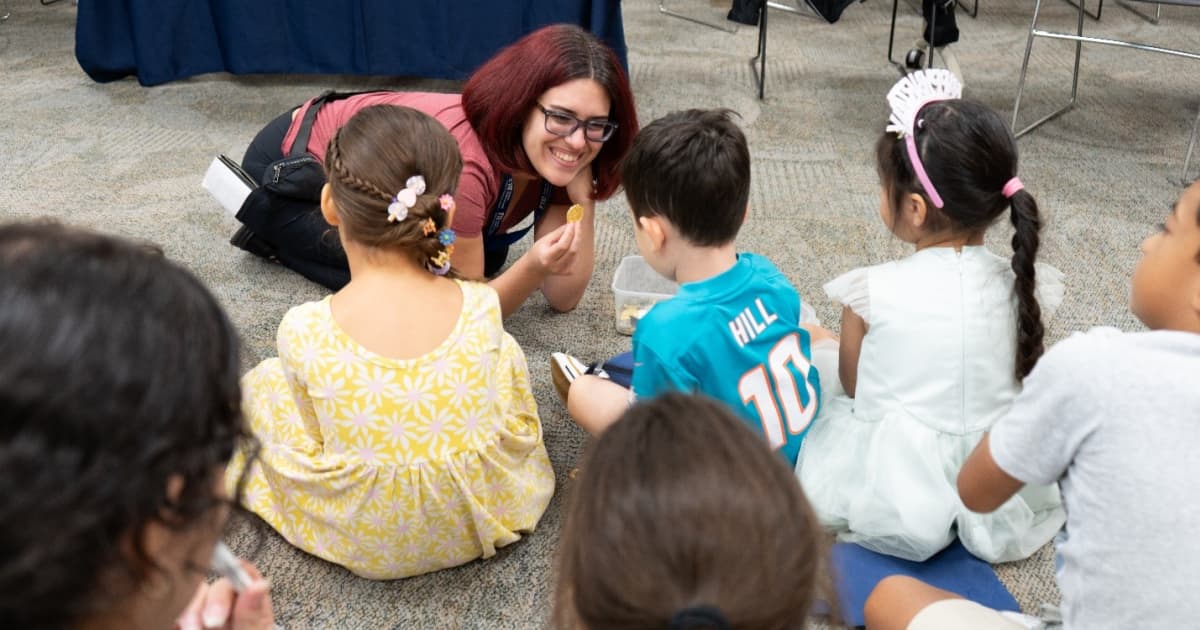
Lucas, a young boy who easily expresses himself at home with his family, struggles with anxiety that inhibits his speaking in public, especially around adults. This summer, he participated in Brave Bunch, an intensive week-long treatment program at Florida International University’s (FIU) Center for Children and Families. The program aims to help children with selective mutism gradually overcome their anxiety through practical speaking exercises in real-world situations.
Read More
By the end of the week, his parents, Joey and Gisele, noticed positive changes in their son. They remarked, "He's more willing to do things on his own without prompting, even silly things that show his personality." They added that the program taught them how to better support Lucas without rushing to intervene in various situations, thus reducing both Lucas's and their own anxieties, particularly in social settings.
Selective mutism is often confused with shyness, but it is classified as an anxiety disorder. Typically, children with this condition communicate comfortably with family but become mute in other environments, such as school or around unfamiliar adults. Symptoms usually arise before the age of five, but many children remain undiagnosed until they start school, partially due to misunderstandings surrounding the condition.
Aileen Herrera, the clinical director of Brave Bunch, explains that many mistakenly believe children choose not to speak. “The reality is that they want to communicate, but anxiety makes speaking feel impossible.” Untreated, this anxiety can hinder friendships, learning, and overall confidence during crucial childhood years. Brave Bunch provides a supportive setting for practice.
Unlike traditional therapy sessions held weekly, Brave Bunch engages children in multiple structured activities over several days. These include games, classroom tasks, peer conversations, and community outings, all under clinician support. Parents also play a crucial role, observing their children during sessions and learning how to encourage “brave talking” in everyday situations, such as ordering food or speaking to a teacher.
Jami Furr, a senior psychologist at the MINT Anxiety Clinic and developer of Brave Bunch, highlights the importance of parental involvement in fostering continued progress outside the program. Since its inception in 2014, Brave Bunch has assisted approximately 257 children and their families. There are only three similar intensive programs for selective mutism in the Southeast U.S., making Brave Bunch a unique resource.
The program has contributed to important research in the field. In 2017, FIU conducted a National Institutes of Health-funded randomized controlled trial that indicated significant reductions in symptoms for participating children, with lasting improvements observed post-treatment. Furr noted that this research confirmed the effectiveness of the program and suggested that early treatment correlates with better long-term outcomes.
Ali, another parent, shared how her daughter Ryann began to open up after just two days at Brave Bunch. "Her counselor described her as 'silly,'" Ali recounted. Recognizing this feedback was a turning point for Ali, showing her that Ryann felt safe enough to reveal more of herself. Even after the program concluded, Ali witnessed her daughter take a bold step by independently approaching a hotel employee to request a pool float—a significant milestone for Ryann.
The program also shifted Ali's parenting approach. She learned to support Ryann without being overly intrusive and to encourage her to speak at her own pace. Herrera emphasized the importance of timely, evidence-based treatment while reassuring families that selective mutism is manageable. "We want every child to leave believing, 'I can do hard things.'" For children like Lucas and many others, each successful conversation signifies another brave stride forward.