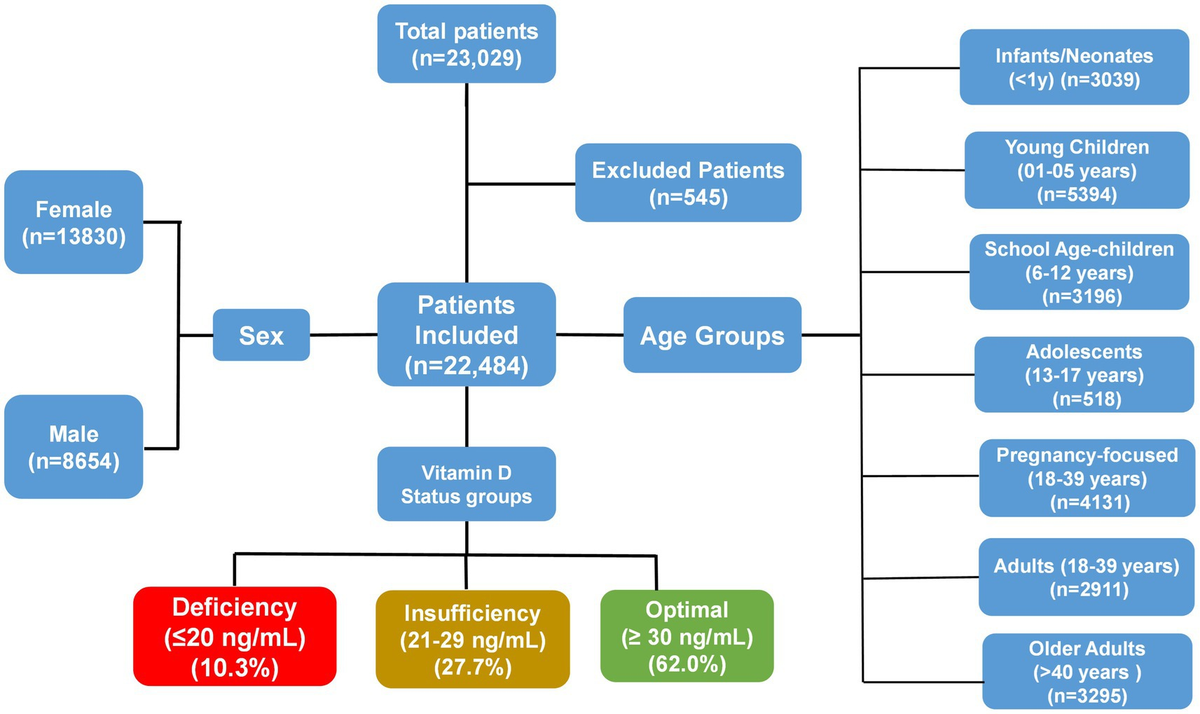
A recent study conducted at Liuyang Maternal and Child Health Care Hospital in Hunan, China, assessed the prevalence and correlates of vitamin D deficiency among 22,484 patients from March 2024 to September 2025. The study aimed to fill gaps in understanding vitamin D status in subtropical regions, where data has been limited.
Read More
The findings revealed that the overall prevalence of vitamin D deficiency among the cohort was 10.3% (2,314 individuals), while 27.7% (6,221 individuals) exhibited low levels, and 62.0% (13,949 individuals) had optimal levels. The mean serum 25-hydroxyvitamin D [25(OH)D] concentration was 33.8 ± 11.9 ng/mL. Notably, deficiency rates varied significantly by age, being lowest in infants (3.1%) and young children (4.2%), but highest in adolescents (18.2%) and young adults aged 18-39 (17.2-17.3%). Females showed a higher deficiency rate (13.1%) compared to males (5.8%).
Seasonal variability was also pronounced, with deficiency peaking in spring at 19.5% and dropping to 4.5% in fall. The analysis indicated a strong inverse correlation between age and 25(OH)D levels. This highlights a critical need for targeted interventions for vulnerable groups such as adolescents and younger women, especially during spring months, when deficiency rates are highest.
The study emphasizes the importance of addressing vitamin D deficiency as a public health concern, particularly in subtropical regions where environmental factors may contribute to lower sunlight exposure.