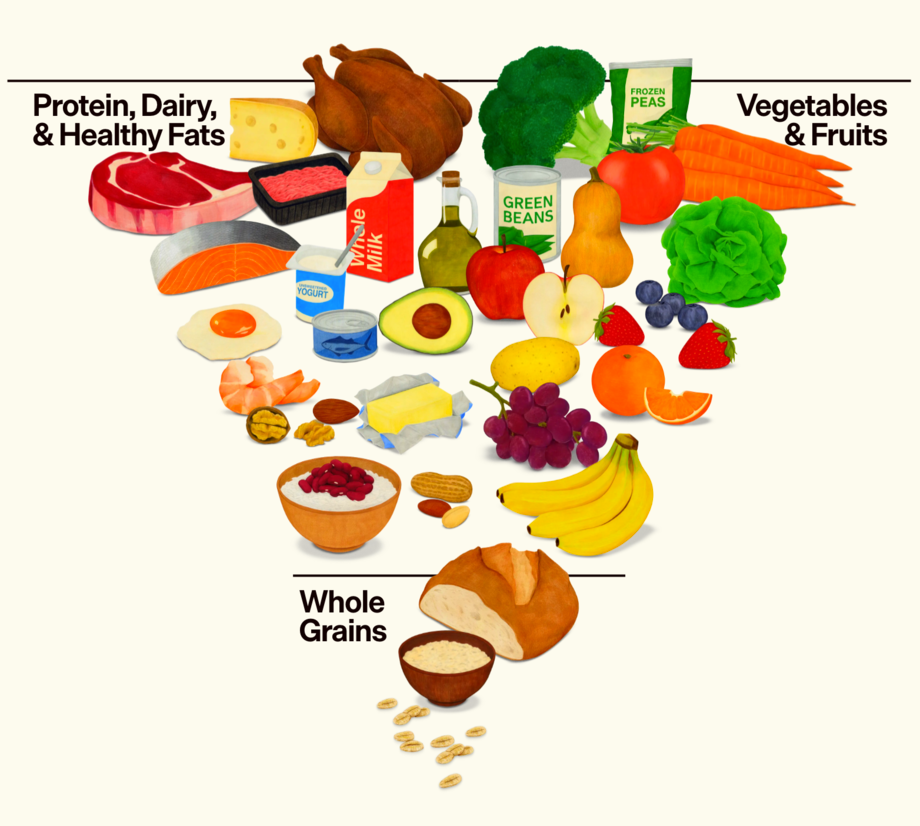
The 2025-2030 Dietary Guidelines for Americans have introduced significant updates to dietary recommendations, moving away from the MyPlate visualization to a food pyramid format. This transition coincides with National Let’s All Eat Right Day and aims to clarify dietary guidance for the public.
Read More
Fruits, vegetables, grains, proteins, and dairy remain essential components of a balanced diet. However, changes have been made regarding recommended portions and types of food within these categories. Notably, the guidelines now double the recommended protein intake, shifting the emphasis towards animal proteins over plant-based options. In dairy recommendations, full-fat varieties are now favored instead of the previously recommended low-fat options for children over age two and adults. While fruit and vegetable recommendations have not drastically changed, there is a slight increase in the vegetable intake advised.
The guidance on grains remains largely consistent, but it emphasizes the consumption of whole grains over refined grains, supported by evidence linking whole grains to better health outcomes.
The guidelines also address the concept of ultra-processed foods, which include items often categorized as junk food, such as potato chips and packaged sweets. Although about 75% of food products fall into this category due to industrial processing, not all processed foods are harmful; prepackaged wholesome options can play a role in a healthy diet if consumed in moderation.
In a notable update, the guidelines promote red meat, which had previously been discouraged due to its higher saturated fat content. Although the guidelines point to a higher inclusion of red meat, research links processed red meats, like bacon and sausages, to negative health effects.
The shift to recommending full-fat dairy instead of low-fat alternatives reflects ongoing debates about fat intake, as both types offer essential nutrients but differ in saturated fat content.
The newly designed inverted food pyramid aims to encourage the consumption of less-processed foods while prioritizing protein and dairy, choosing healthy fats, and reducing sugar intake. The pyramid highlights whole grains, but there is potential for confusion regarding grains as it suggests a reduction rather than an increase in whole grain consumption.
Historically, the food pyramid was introduced in 1992, aimed at providing a visual guide to dietary needs, but faced criticism for lack of clarity regarding food types. In 2011, MyPlate replaced it, focusing on realistic portion sizes on a circular plate. The current inverted pyramid is designed to refocus individuals on healthier food choices without specific guidance on portion sizes.
For those interested in further insights, Allison Miner, a food systems expert at George Mason University, is available for inquiries regarding the guidelines and their implications.