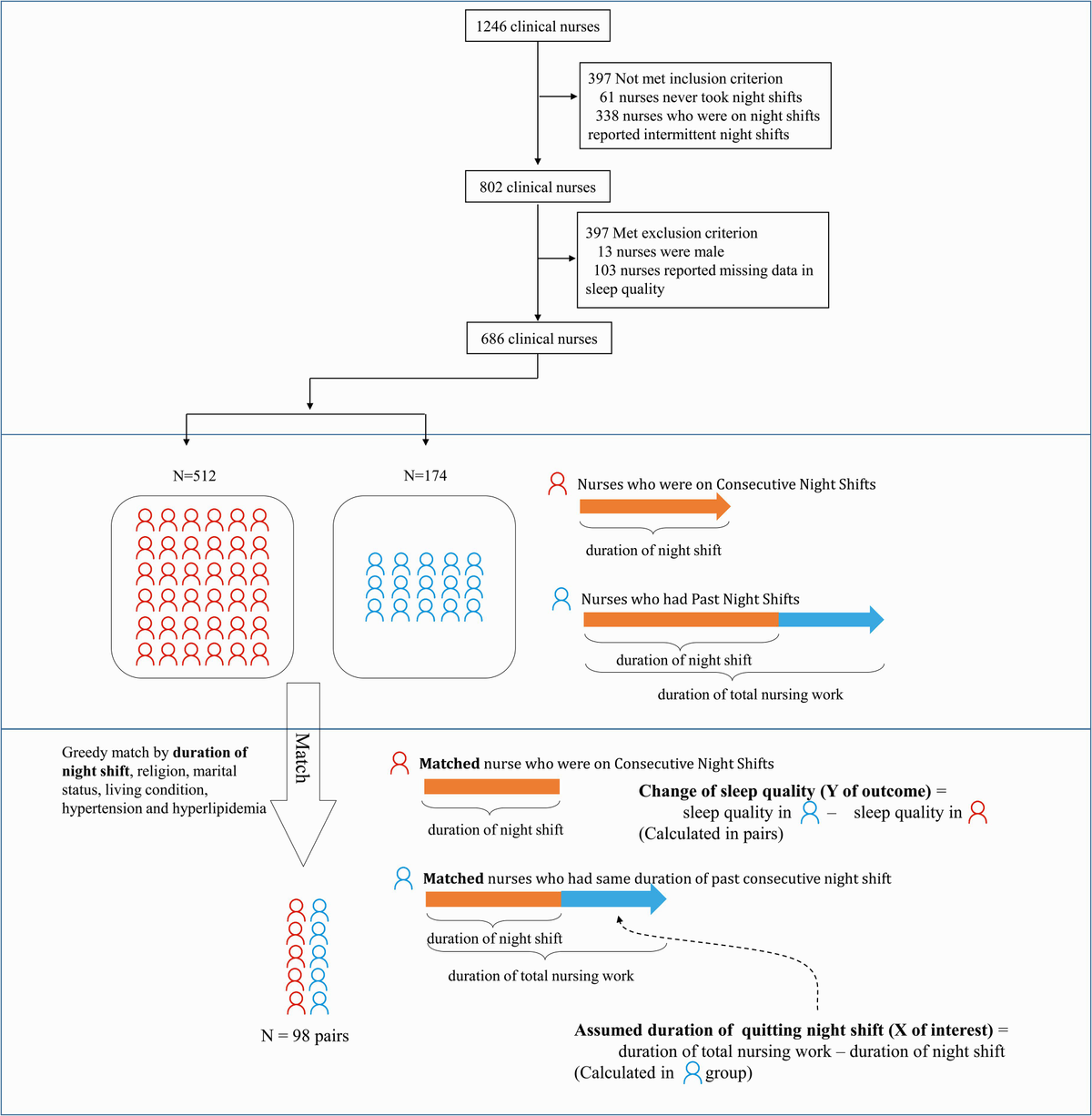
A recent study published in Frontiers in Neuroscience analyzed sleep quality in nurses working consecutive night shifts compared to those who previously worked night shifts. The study used the Pittsburgh Sleep Quality Index (PSQI) to assess sleep quality among 512 nurses currently in night shift roles and 174 who had shifted to day work after prior night shifts. Results revealed that 62.11% of current night shift nurses reported poor sleep quality, while 55.75% of past night shift nurses indicated the same.
Read More
In further analysis, the study found that past night shift nurses had a statistically lower PSQI score, with a mean difference of -0.82 (95% CI: -1.27 to -0.38, p < 0.001), and a lower likelihood of poor sleep quality (odds ratio: 0.49, 95% CI: 0.29 to 0.80, p = 0.005) compared to their current night shift counterparts. Researchers noted a pattern where PSQI scores increased with years of consecutive night shifts, peaking around 12 years before plateauing.
The study also constructed a hypothetical cohort to examine sleep quality changes after quitting night shifts. This analysis suggested a U-shaped relationship, where initial improvement in sleep quality was observed after leaving night shifts, but this improvement did not last indefinitely. The findings underscore the chronic issues related to sleep quality faced by night shift nurses, prompting calls for enhanced sleep hygiene education and strategic management regarding night shift roles in nursing.
The multicenter survey took place between April and June 2016 across four hospitals in Wuhan, China. It focused on the interplay between nursing work patterns and sleep disruptions, emphasizing the need for further longitudinal studies to better understand the long-term impacts of night shift work on sleep health.