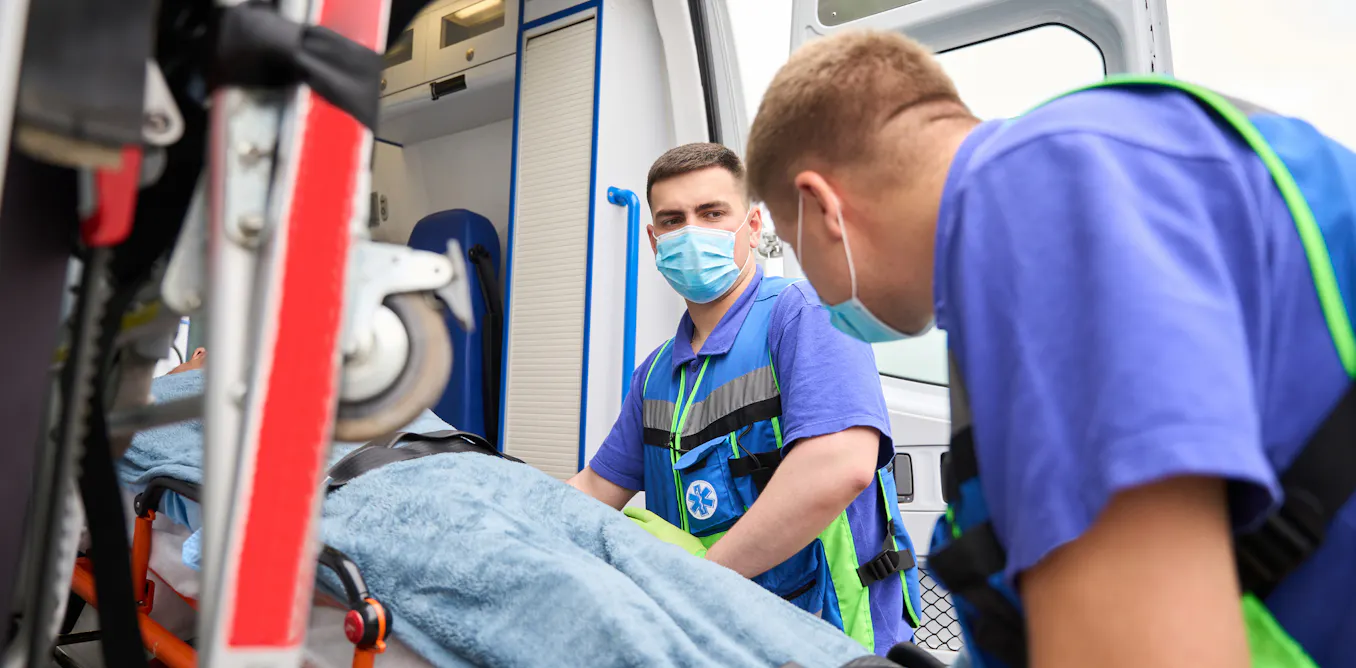
During a recent 32-hour shift as a paramedic in Pittsburgh, I experienced fatigue that significantly impaired my performance. My partner and I were dispatched early in the morning to assist a patient who was vomiting and unresponsive. Despite our prompt response, I felt the familiar physical toll of exhaustion, a common issue among emergency medical service (EMS) workers.
Read More
As a nationally registered paramedic and a professor of emergency health care worker safety at the University of Pittsburgh, I have observed how the demanding hours increase the risk of fatigue and negatively impact cognitive functions among EMS workers. An audit from 2023 revealed that many EMS clinicians in the Pittsburgh region often work overtime, frequently exceeding 18-hour shifts.
The impact of fatigue was evident when we arrived at our patient, an older man who began to shake violently. Amidst the chaos of vital signs checks and an influx of family members and police, my exhaustion clouded my ability to focus. After diagnosing the patient with a third-degree heart block and bradycardia, we transported him to the hospital, but the delay in identifying the critical issue raised concerns about the implications of fatigue.
Longitudinal studies indicate that sleep deprivation is a significant issue for EMS workers, many of whom report getting less than six hours of sleep before their shifts. Chronic fatigue not only increases the risk of medical errors but also poses long-term health threats, including a higher likelihood of cardiovascular diseases.
Solutions such as on-shift napping have been shown to be beneficial. Research indicates that even brief naps of 30 minutes can enhance performance and mitigate risks. Support for on-duty napping comes from credible organizations, including the American Academy of Sleep Medicine and various public safety groups.
Despite this support, negative perceptions surrounding napping in the workplace remain a barrier to implementing official policies. A recent study found that while many EMS employers are open to napping policies, concerns about costs and disruption persist. Most EMS organizations allow naps informally, but formalizing these practices could demonstrate employer support for their staff's well-being.
Additional strategies to reduce fatigue include allowing secondary crews to take over briefly or enabling one crew member to rest while another drives. The “caffeine-nap” method, where a crew member drinks caffeine before a short nap, is another technique that could enhance alertness.
The evidence strongly advocates for on-duty napping as a practical strategy for addressing exhaustion among EMS professionals. How these practices are integrated into EMS work culture will ultimately depend on numerous factors, but prioritizing sleep is crucial for patient safety and clinician well-being.