New research from Flinders University reveals that relying on a single night of sleep testing may not be sufficient for accurately diagnosing obstructive sleep apnoea (OSA). The findings indicate that variability in sleep patterns from night to night can lead to missed or incorrect diagnoses.
Read More
The study, published in npj Digital Medicine, suggests that analyzing sleep over multiple nights could offer a more comprehensive evaluation of OSA. Researchers conducted a prospective clinical trial with approximately 100 adults referred for suspected sleep apnoea, comparing standard one-night laboratory tests with repeated assessments over several weeks in participants' home environments.
Analysis showed significant variability in the severity of sleep apnoea from one night to the next. Lead author Dr. Bastien Lechat, from FHMRI Sleep Health, emphasized that capturing only one night of data may fail to represent a patient's actual condition accurately.
OSA is characterized by repeated interruptions in breathing throughout sleep, posing serious health risks such as cardiovascular disease and diabetes. Yet, diagnosing the disorder accurately has proven challenging. The study's findings highlight a critical limitation of current diagnostic practices.
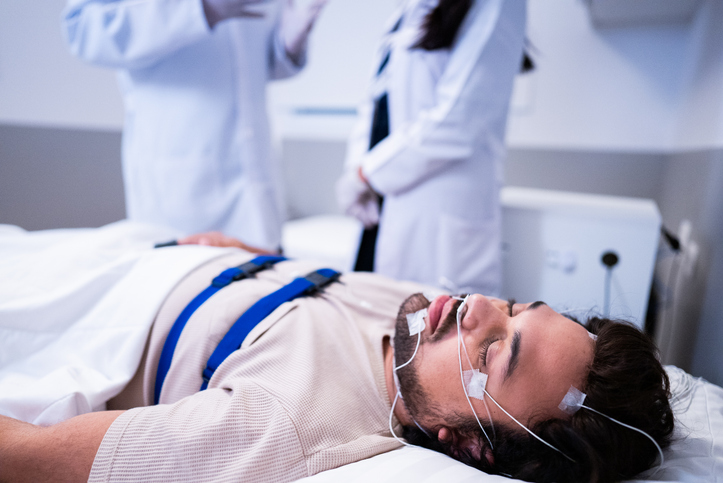
Participants underwent overnight polysomnography—the standard diagnostic test—while also having their sleep monitored with low-burden technologies over time. The comparison demonstrated that single-night testing could misclassify a significant number of patients, especially those whose apnoea patterns fluctuate or who behave differently in a laboratory setting.
Dr. Lechat noted clear discrepancies in results between one-night tests and averages over multiple nights, suggesting that many individuals may experience varying severity of the condition that is not accounted for in traditional assessments. Professor Sutapa Mukherjee, a specialist in Respiratory and Sleep Medicine, added that recognizing sleep apnoea as a dynamic disorder can lead to more accurate understanding and management.
The study also revealed that patients whose diagnoses differed between single-night and multi-night assessments often experienced poorer sleep during laboratory testing, indicating the environment may affect results. Professor Mukherjee stated that these variations in presentation could help explain why misdiagnoses occur.
The research underscores the potential for improved diagnostic accuracy and personalized treatment plans. High variability in OSA may indicate increased cardiovascular risk, suggesting that these patterns could help identify patients more likely to face complications.
The authors advocate for integrating multi-night sleep data with traditional diagnostic methods, enhancing the reliability of diagnoses. For patients, this approach could lead to more accurate representations of their conditions, while clinicians would benefit from more tailored care.
Further research is needed to effectively incorporate multi-night assessments into standard practice, prompting a shift in how sleep apnoea is perceived—as a condition that develops over time rather than one defined by a single night. Professor Mukherjee concluded that this study marks a significant advancement in the field, urging a re-evaluation of current diagnostic methodologies.
The paper, titled ‘Zero burden multi night monitoring with AI enabled technology reduces obstructive sleep apnea misdiagnosis,’ includes contributions from multiple researchers and is available in npj Digital Medicine.