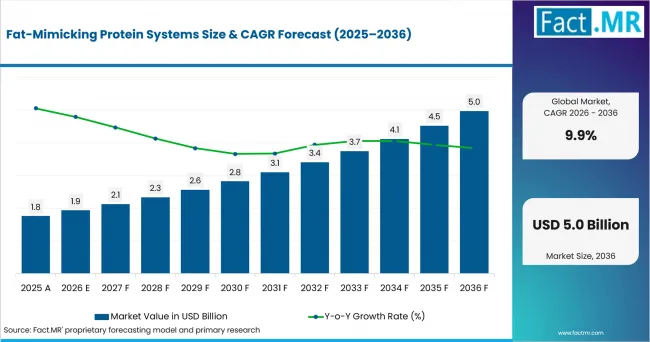
The Fat-Mimicking Protein Systems Market is expected to grow significantly, with a projected value of USD 1.9 billion in 2026 and reaching USD 5.0 billion by 2036, reflecting a compound annual growth rate (CAGR) of 9.9%. As of 2025, the market value stood at USD 1.8 billion, and demand is forecasted to rise steadily over the coming decade.
Read More
Whey proteins are poised to be a leading component, holding a 34.0% share in 2026. These proteins play a crucial role in maintaining creaminess in food products where fat has been removed. Other significant segments include dairy and plant-based alternatives, which are expected to capture a 36.0% market share in the same year.
The primary factors driving market demand include the need for a desirable mouthfeel in low-fat foods across various applications, such as dairy products and beverages. For example, dairy brands seek a smooth texture after reducing fat, and beverage producers aim for proteins that provide body without increased viscosity. Additionally, manufacturers of sauces and dressings require emulsification support to ensure consistency during production and storage.
The market report outlines that dairy brands are responding to increasing consumption guidelines set by China's regulatory bodies, targeting an average per-capita dairy intake of 47 kg by 2030. This regulatory push is likely to further stimulate the demand for fat-mimicking protein systems.
Regional growth varies, with China projected to achieve an 11.2% CAGR by 2036, influenced by the expansion of dairy processing. Japan is estimated to grow at 10.1%, emphasizing the importance of controlled texture in their dairy and beverage industries. The USA and France are both on track for a 9.7% growth rate, while Germany is estimated at 9.5%.
Key suppliers in this sector include Tate & Lyle/SIMPLESSE, Leprino Nutrition, and Arla Foods Ingredients, among others. These companies focus on developing protein systems that replicate fat-like textures and enhance overall mouthfeel in various food formulations.
Key advancements in the Fat-Mimicking Protein Systems Market are expected to revolve around improving sensory attributes while reducing complexity in recipes. These developments will be crucial for market players as they strive to meet consumer demands for healthier yet appealing food options.