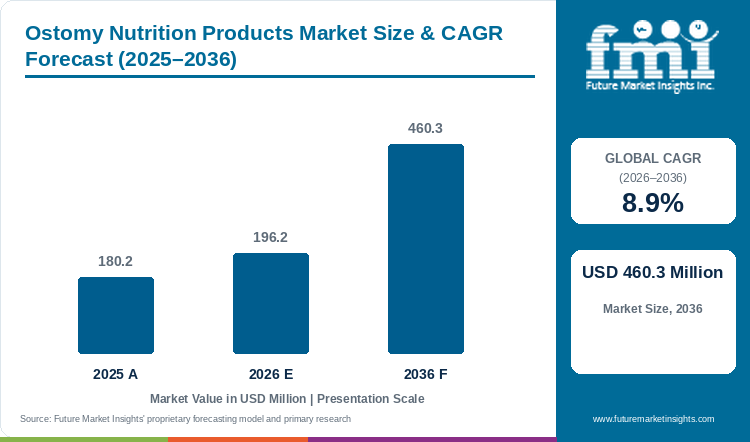
The ostomy nutrition products market is projected to increase from USD 196.2 million in 2026 to USD 460.3 million by 2036, reflecting a compound annual growth rate (CAGR) of 8.9% from 2026 to 2036. Growth in this sector is driven by the rising need for nutritional support following ostomy surgery, particularly protein-rich and electrolyte-containing products.
Read More
The market size will grow from an estimated USD 180.2 million in 2025, with the demand for specialized nutrition products expected to rise due to the improved management of stoma output. For example, St George's guidance advises that stoma output exceeding one liter daily can lead to dehydration, requiring effective nutritional interventions.
In terms of geographical growth, South Korea is anticipated to expand at a higher rate of 9.4% CAGR within the same timeline, compared to 8.6% expected for the United States. A 2025 study indicated that structured multidisciplinary monitoring significantly reduced dehydration readmission rates among ileostomy patients in the U.S.
Key product types that will drive market revenue include low-residue high-protein oral nutritional supplements (ONS), which are projected to comprise about 39.8% of the market in 2026. The ileostomy segment will represent approximately 52.1% of product demand due to its direct connection to hydration needs and output management. The early postoperative phase is expected to dominate the market with a 54.1% share, reflecting critical nutritional requirements during recovery.
Major companies active in this market include Medtrition, Abbott, Danone Nutricia, Nestle Health Science, DripDrop, Victus, Global Health Products, and Fresenius Kabi. These companies are focusing on providing products that support recovery nutrition and effective hydration management post-surgery.
As the market develops, opportunities will arise from hospital-to-home nutrition bundles and increasing demand for precise dietary support during recovery phases. The report emphasizes the necessity of structured nutritional guidance in optimizing patient recovery and preventing complications such as dehydration.