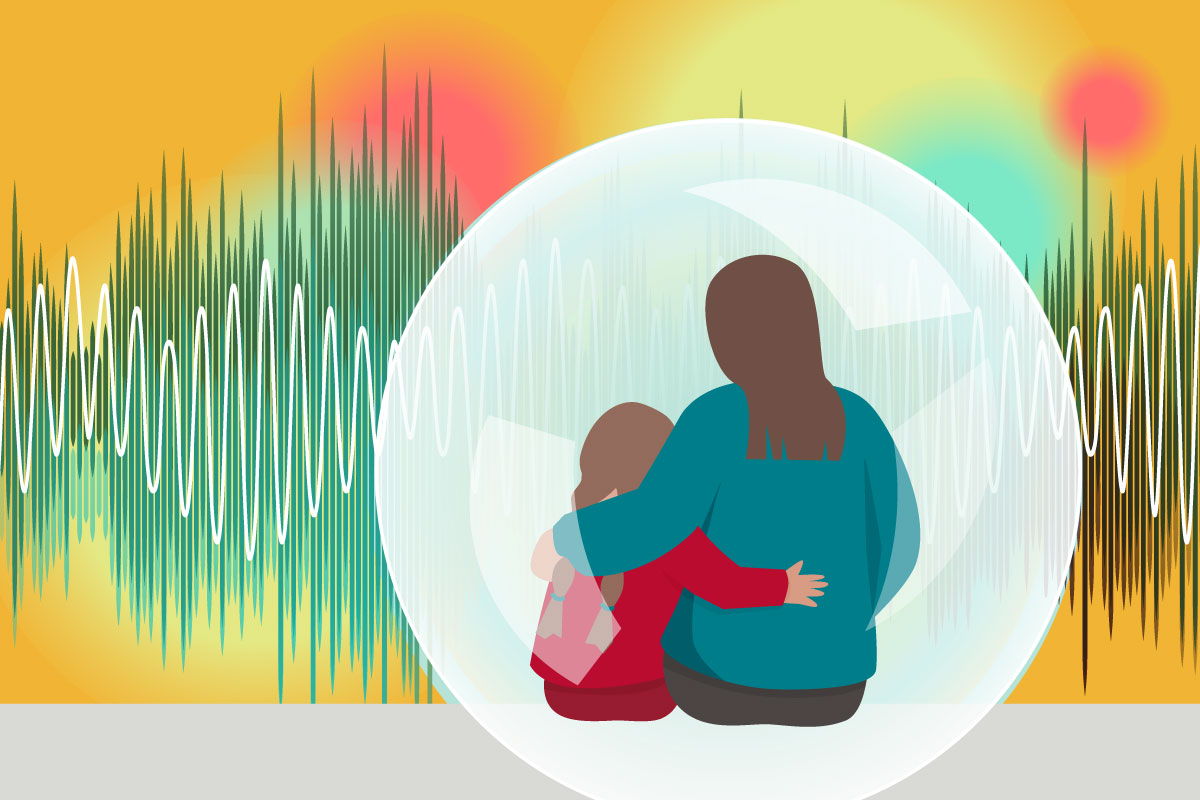
A study from Washington University School of Medicine in St. Louis reveals significant insights into sensory over-responsivity in children, which is characterized by heightened reactions to common sensory stimuli, such as clothing tags or loud noises. This phenomenon is estimated to affect 15% to 20% of children and is often associated with autism, but also appears across various psychiatric conditions.
Read More
Researchers analyzed data from over 15,000 children aged 6 to 18 and discovered that sensory over-responsivity is linked not only to autistic traits but also to anxiety, regardless of whether the children have autism. Notably, the study found no direct connection between sensory over-responsivity and ADHD (Attention-Deficit/Hyperactivity Disorder).
Examining brain scans of a subset of the children, the researchers noted that even mild sensory issues correlate with distinct patterns of brain connectivity. The findings, published on August 13 in the Journal of the American Academy of Child and Adolescent Psychiatry, challenge the long-held view that sensory sensitivity is solely a feature of autism. Senior author Dr. Rebecca Schwarzlose emphasized that children experiencing these sensory challenges are not merely exhibiting difficult behavior; rather, these behaviors are rooted in specific neurological differences.
The research highlights that sensory over-responsivity is prevalent among children with various psychiatric conditions, such as anxiety and obsessive-compulsive disorder, complicating diagnosis and treatment strategies. The study's methodology involved pooling data from 15,728 children alongside caregiver questionnaires regarding symptoms of anxiety, ADHD, and autism-related traits.
The findings indicate that most associations between sensory over-responsivity and other conditions diminished upon closer examination, leaving a consistent link to autism and anxiety, but not ADHD. The results were consistent across general community samples and children diagnosed with autism, indicating this pattern persists throughout different age groups.
In addition, brain imaging data from 9,197 children indicated that sensory over-responsivity is associated with decreased connectivity between brain networks responsible for memory and sensory processing. According to first author Christina Luo, weak connections can lead sensory information to trigger inappropriate responses, such as a defensive reaction to a harmless sound.
The research team plans to further investigate the emergence of sensory over-responsivity in early childhood and its underlying neural mechanisms to identify potential early interventions. Dr. Schwarzlose concluded by noting the importance for parents to support their children in navigating sensory challenges effectively.