A new research study conducted by South Korean scientists at the Gwangju Institute of Science and Technology (GIST) suggests that transcranial photobiomodulation (tPBM), which involves shining near-infrared light on the head, can alleviate insomnia symptoms. Led by Professors Kim Tae and Kim Jae-gwan, the study, announced on September 24, explores how this technology influences the brain's regulation of sleep without the need for surgery or medication.
Read More
The research team aimed to address the limitations of current insomnia treatments, such as sleeping pills, which can lead to dependence and side effects, and cognitive behavioral therapy, which often requires specialized access. They sought a non-drug alternative that complements existing treatments by harnessing the brain’s natural sleep regulation process.
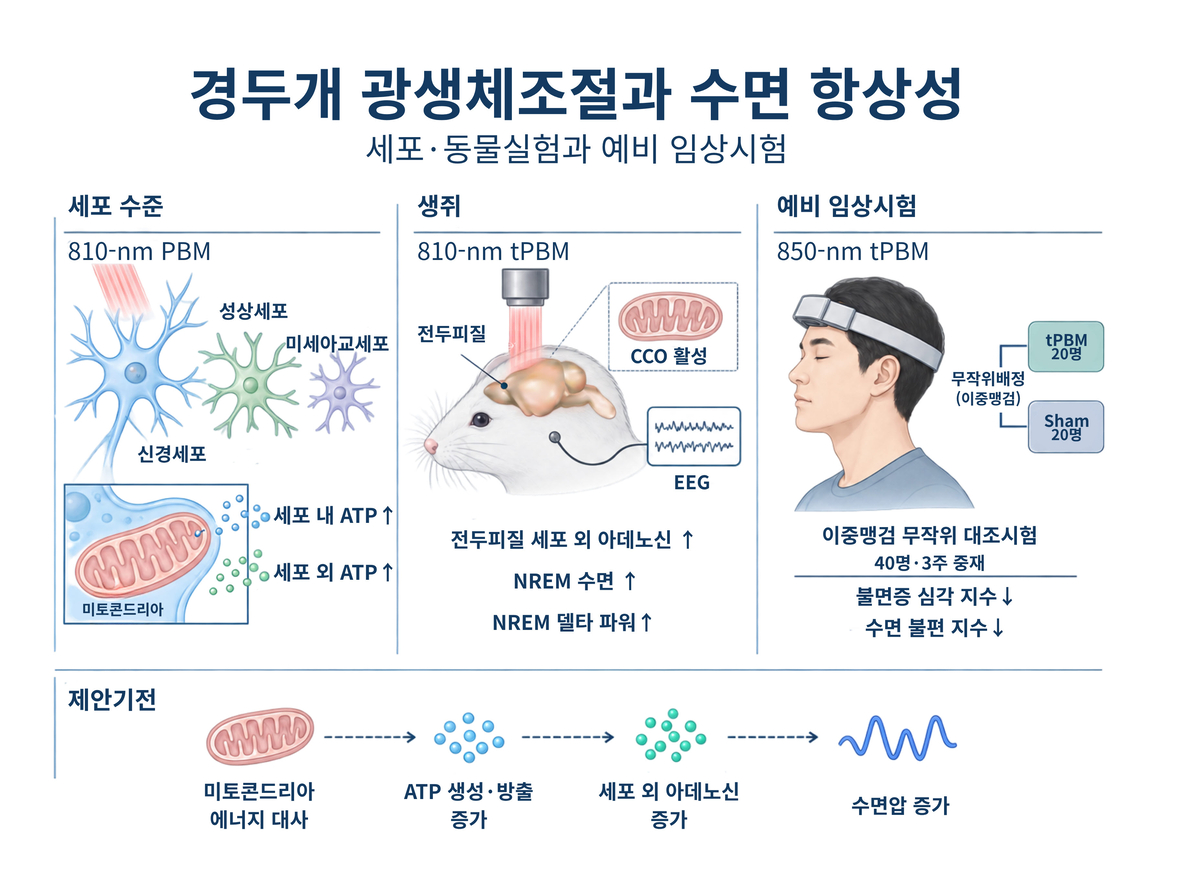
The researchers explained that as a person remains awake, sleep pressure builds in the brain, driven by the accumulation of adenosine, a substance that promotes sleepiness. They identified that near-infrared light, which is invisible to the human eye, could increase adenosine levels. This light penetrates the scalp and skull to stimulate the activity of mitochondria, which produce energy in brain cells.
The team hypothesized that stimulating mitochondrial activity with near-infrared light could lead to an increase in adenosine triphosphate (ATP). As ATP breaks down, adenosine levels would rise, enhancing sleep pressure and facilitating the onset of sleep.
To test this, the researchers directed near-infrared light at different brain cells and confirmed increased ATP levels. In animal studies with mice, exposure to near-infrared light resulted in less time awake and more time spent in non-REM sleep. Additionally, adenosine levels in the mice's brains increased, with associated delta waves linked to deep sleep. These effects were observed to persist for up to three hours post-stimulation.
The study included a preliminary clinical trial with 40 adult participants suffering from insomnia. Participants were randomly assigned to a stimulation group, receiving near-infrared light treatment via a headband, or a control group with no light exposure. The stimulation group’s device emitted light at a wavelength of 850 nanometers for up to one hour nightly. Subjective assessments indicated a 26% reduction in their Insomnia Severity Index (ISI) scores and a 29.6% drop in Pittsburgh Sleep Quality Index (PSQI) scores.
While these findings suggest improved sleep quality, the researchers cautioned that improvements were based on participants' self-reported data. Objective sleep measurements demonstrated a roughly 30% reduction in the time taken to fall asleep for participants who wore the device correctly, but there were no significant differences between the stimulation and control groups overall.
The researchers noted that, unlike in animal models, the human trial did not directly measure adenosine levels in the brain, indicating a need for further validation of whether the changes observed in animal studies apply to humans. Jung Ji-eun, a lead researcher, highlighted the study’s significance in connecting cellular, animal, and human responses to near-infrared light stimulation.
Professor Kim Tae emphasized the potential benefits of improving insomnia symptoms and sleep quality, while Kim Jae-gwan pointed out the necessity for further exploration of factors like light wavelength, intensity, and duration to optimize this technology for individual sleep patterns. The results of this study were published in the journal Molecular Psychiatry.