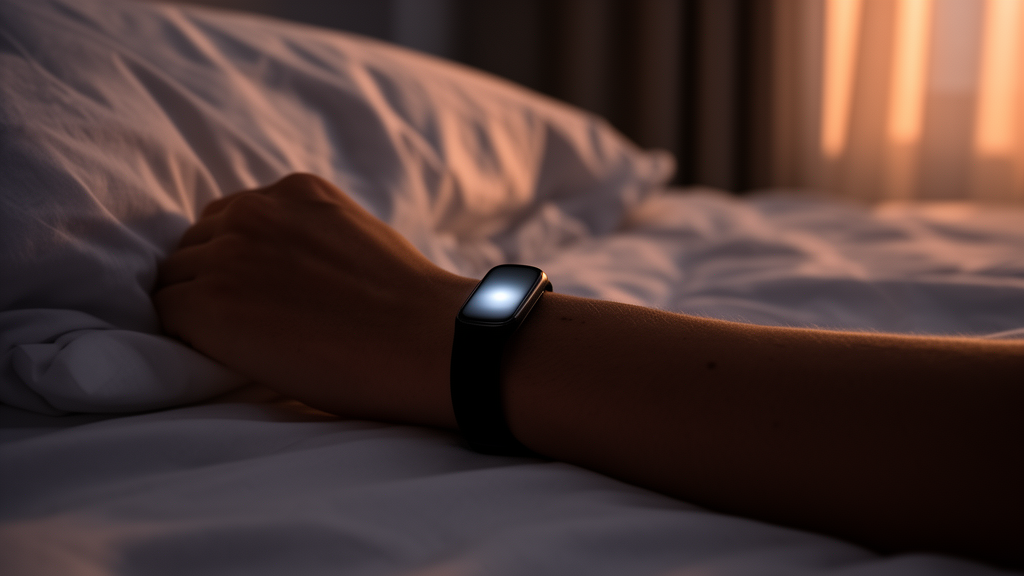
A large-scale study utilizing data from the UK Biobank has demonstrated that sleep patterns tracked by a wrist-worn accelerometer provide significant insights into future health outcomes. Researchers, led by Jingsong Luo, analyzed movement data from over 95,000 middle-aged and older adults to reconstruct actual sleep stages, including rapid eye movement (REM) and deep slow-wave sleep. The findings, published in PLOS Medicine, connect these sleep patterns to the onset of various health issues.
Read More
The team used an algorithm called SleepNet to assess wrist accelerometer data, avoiding biases from traditional questionnaires and the impracticalities of polysomnography. Key metrics included time spent in different sleep stages, total sleep duration, sleep irregularity, and wakefulness after sleep onset. Participants wearing the accelerometers were followed until they experienced the first onset of disease, death, or the study’s conclusion on April 1, 2024, with a median follow-up of 8.9 years.
Through a phenome-wide association analysis across 1,049 health outcomes, the study found that variations in sleep patterns corresponded with 156 diseases. Specifically, increased REM sleep was associated with a lower risk of 83 diseases, while deep sleep linked to fewer risks of 7 diseases. In contrast, higher sleep irregularity raised the risks of 3 diseases, and more frequent awakenings, known as wakefulness after sleep onset (WASO), were tied to 6 diseases.
Sleep duration had a complex relationship with disease risk. The analysis revealed that optimal sleep duration, typically between 6 and 8 hours, was associated with lower risk for 69 disease types. Sleeping fewer than 5 hours per night correlated with significant adverse health associations, marking it as a substantial risk factor.
This research signifies a milestone in wearable technology's capabilities, enabling extensive characterization of sleep patterns beyond laboratory settings, which can distort sleep quality. The findings also highlight the necessity of maintaining healthy sleep patterns, as numerous health outcomes are associated with adequate sleep duration and quality. The study underscores the potential of consumer-grade wearable devices as useful tools for monitoring sleep and its implications for long-term health.