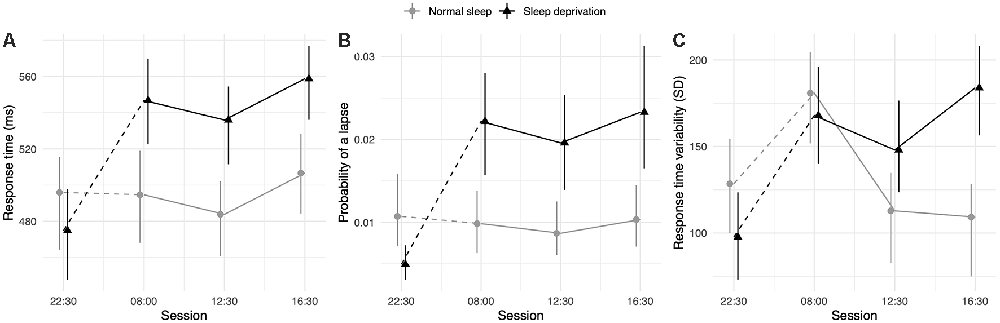
A recent study published in Frontiers in Behavioral Neuroscience assessed cognitive performance impacts following sleep deprivation and variations across different times of day. The research focused on the use of two-minute smartphone-based cognitive tests, making it easier to evaluate cognitive performance outside traditional lab settings.
Read More
In the study, 182 healthy participants took part in a randomized experiment after three nights of normal sleep. Participants were divided into two groups; one underwent a night of total sleep deprivation while the other maintained standard sleep patterns. Utilizing the Karolinska WakeApp (KWA), they completed quizzes measuring attention, arithmetic skills, episodic and working memory, and cognitive conflict through a Stroop test.
Cognitive performance was measured at baseline (22:30) and subsequently at 08:00, 12:30, and 16:30 the next day. Results indicated that sleep deprivation significantly impaired performance in tasks involving attention, arithmetic, episodic memory, and working memory. No significant effects from sleep deprivation were observed on the Stroop test.
Further analysis revealed that attention and arithmetic performance varied across different times of day, with sleep deprivation's adverse effects also fluctuating throughout the day. Specifically, cognitive impairment was most pronounced in the late afternoon compared to the morning.
The findings suggest that brief 2-minute cognitive evaluations via smartphone can effectively capture the cognitive impairments associated with sleep loss and variations throughout a typical day. The researchers posited that such methods could enhance understanding in sleep and cognitive function studies, especially in fields demanding performance monitoring in real-world contexts.