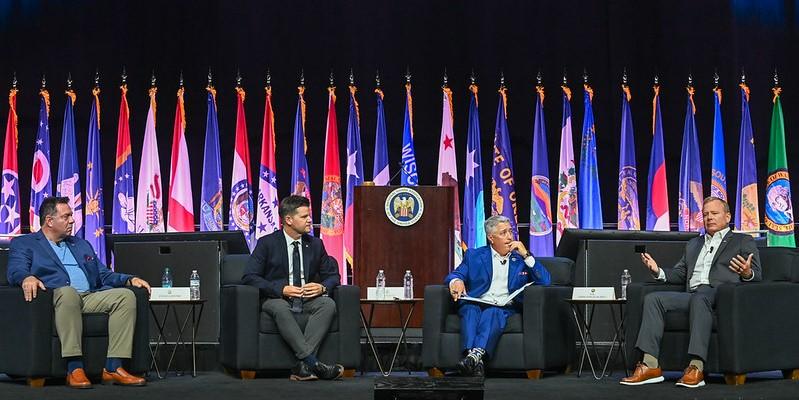
The NGAUS general conference in Washington highlighted pressing issues for National Guard leaders, featuring a variety of perspectives relevant to all levels of the organization.
Read More
An opening panel focused on the implications of asymmetric warfare for the National Guard. Retired Air Force Lt. Gen. David Julazadeh, chief operating officer of Business Executives for National Security, emphasized that while the nature of war remains constant, its character is changing rapidly. He pointed to evolving battlegrounds shaped by factors such as inexpensive drones, transparent combat environments, and the increasing influence of non-state actors.
Army Brig. Gen. Chad Bridges, adjutant general of Arkansas, remarked on the necessity of adaptation in both offensive and defensive strategies. He noted the National Guard's unique role, being present in 3,000 communities across the country.
Additional insights were offered by Air Force Maj. Gen. Mark Morrell, adjutant general of South Dakota, and Laura Kupe, deputy chief program officer at BENS.
The second panel continued NGAUS's focus on mental health issues among military personnel. Steven Grayhm, producer and director of the film Sheepdog, discussed the dual nature of post-traumatic stress (PTS) as both a psychological and physiological reaction to trauma, contrasting it with post-traumatic growth, which can lead to positive changes in an individual’s life.
Retired Air Force Col. Chris Stricklin, a mental health advocate and former Thunderbirds pilot, highlighted his dedication to helping veterans achieve post-traumatic growth. Rich Ganley, founder of Positive Impact Alliance, shared his organization's mission to support the overall well-being of first responders. The discussion was moderated by Jon Eisberg, vice president of NGAUS.
A third panel revisited the September 11, 2001, terrorist attacks, featuring retired Maj. Heather “Lucky” Penney and retired Marine Corps Lt. Col. Robert Darling, who shared their unique perspectives from that day.