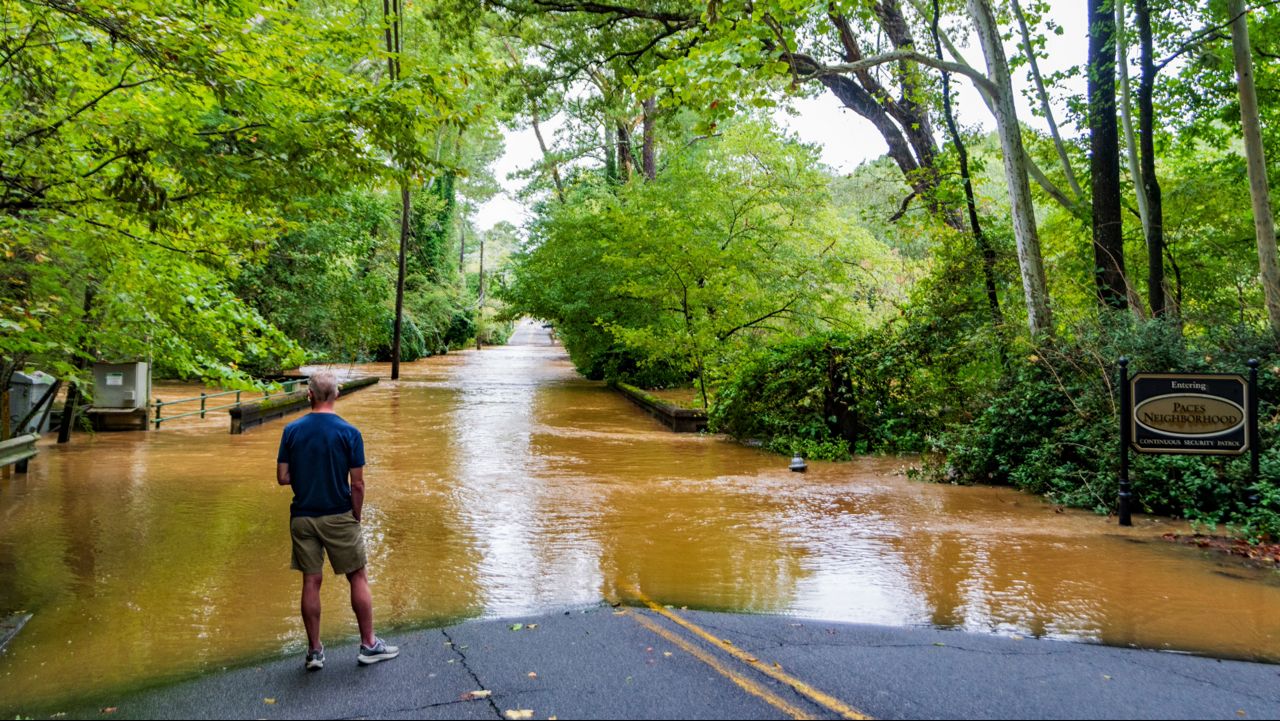
The United States has seen a significant rise in billion-dollar weather and climate disasters over recent decades, a trend closely linked to climate change. Hurricanes, flooding, heat waves, and severe storms lead not only to substantial economic losses and fatalities but also pose risks to mental health in affected communities.
Read More
On September 26, 2024, Hurricane Helene made landfall in Florida's Big Bend region as a Category 4 storm, bringing winds of 140 mph. As Helene progressed through Georgia, the Carolinas, and Tennessee, its winds weakened, but catastrophic flooding ensued, claiming more than 200 lives across the Southeast. Over 90 deaths were attributed to freshwater flooding, including landslides and debris flows.
Residents in East Tennessee, where the storm's effect was deeply felt, recounted their experiences. Betty, a Greene County resident, described Helene as unprecedented, stating, “It was something I’d never seen before. I had seen water up to that house at one time, but never like that.”
Tragically, Laura Harville lost her brother Boone, who drowned while attempting to rescue others when his boat capsized at Bird’s Bridge. Laura recalled the moment she learned of his fate, expressing her shock and grief.
The aftermath of Helene also revealed deep psychological impacts among survivors. The McNabb Center, a mental health provider in East Tennessee, reported an increase in mental health issues such as grief, depression, anxiety, and post-traumatic stress disorder (PTSD). Jerri Little, a provider at the center, noted that such conditions have become more prevalent as time passes.
Laura Harville shared her own challenges with grief and anxiety following her brother's death, which led her to seek counseling and medication. Despite stigma surrounding mental health care, she emphasized the importance of seeking help.
Barriers to accessing mental health support, such as financial difficulties and lack of housing or transportation, can hinder recovery after such disasters. Dr. Nicole Clark, a mental health expert, highlighted that individuals with the most trauma exposure and limited resources, particularly children and older adults, are especially vulnerable.
The psychological burden of repeated extreme weather events is palpable in East Tennessee, where areas previously not prone to flooding are now susceptible to minor storms. Jana Wills, director of the East Tennessee Long-Term Recovery Group, addressed the ongoing anxiety triggered by new flash flood alerts in communities still recovering from Helene.
As extreme weather becomes more frequent, the mental health consequences are expected to increase. Reports indicate that climate anxiety is affecting a growing number of individuals, illustrating the emotional toll of experiencing or witnessing such disasters.