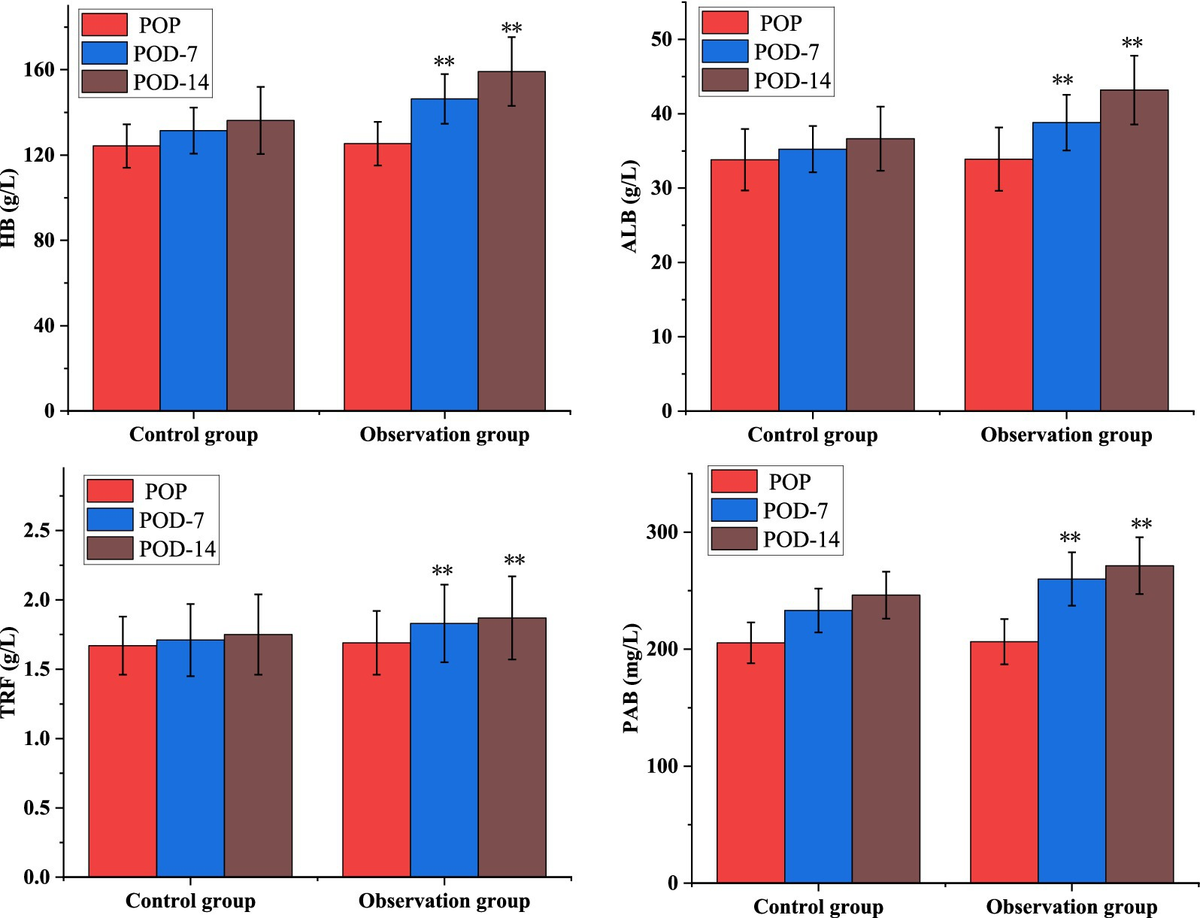
Researchers conducted a study to assess the effects of enteral nutrition with dietary fiber on patients who underwent laparoscopic colorectal cancer (CRC) surgery. The study involved 164 CRC patients who were randomly assigned to either a control group, receiving standard nutritional intervention, or an observation group, which received enteral nutritional support containing dietary fiber. Both groups were monitored continuously until the 14th postoperative day.
Read More
Results indicated that in the observation group, levels of procalcitonin (PCT), beta-endorphin (β-EP), C-reactive protein (CRP), interleukin-1 (IL-1), interleukin-8 (IL-8), and tumor necrosis factor-alpha (TNF-α) were significantly lower compared to the control group (p < 0.01). Conversely, nutritional parameters such as albumin (ALB), hemoglobin (HB), transferrin (TRF), and prealbumin (PAB) were significantly higher in the observation group (p < 0.01).
Four machine learning models—Logistic Regression (LR), Random Forest (RF), Neural Network (NN), and Support Vector Machine (SVM)—were created to predict the effects of dietary fiber on postoperative immune function and inflammation. Among these models, the NN model performed the best.
The study also highlighted that dietary fiber administration post-surgery enhances immune function, reduces inflammation, and helps improve the nutritional status of CRC patients. Specifically, the dietary fiber group showed quicker recovery of intestinal function compared to the control group.
The patient data from January 2023 to August 2024 confirmed that early nutritional support with dietary fiber can significantly impact recovery outcomes in CRC patients. The findings suggest dietary fiber could play a crucial role in postoperative care and recovery from colorectal cancer.
The study was ethically approved by the Clinical Ethics Committee of Yantaishan Hospital, China, and complied with all institutional guidelines. The research underscores the potential benefits of dietary interventions in managing postoperative recovery and enhancing overall patient outcomes in colorectal cancer.